FAST & FREE U.S. Shipping
 Buy Now, Pay Later!
 Price Lock! Beat The Tariffs
 1-Year Warranty
 U.S. Quality & Support
 Now Shipping to Canada
 Call Our Team: (650) 292-4445

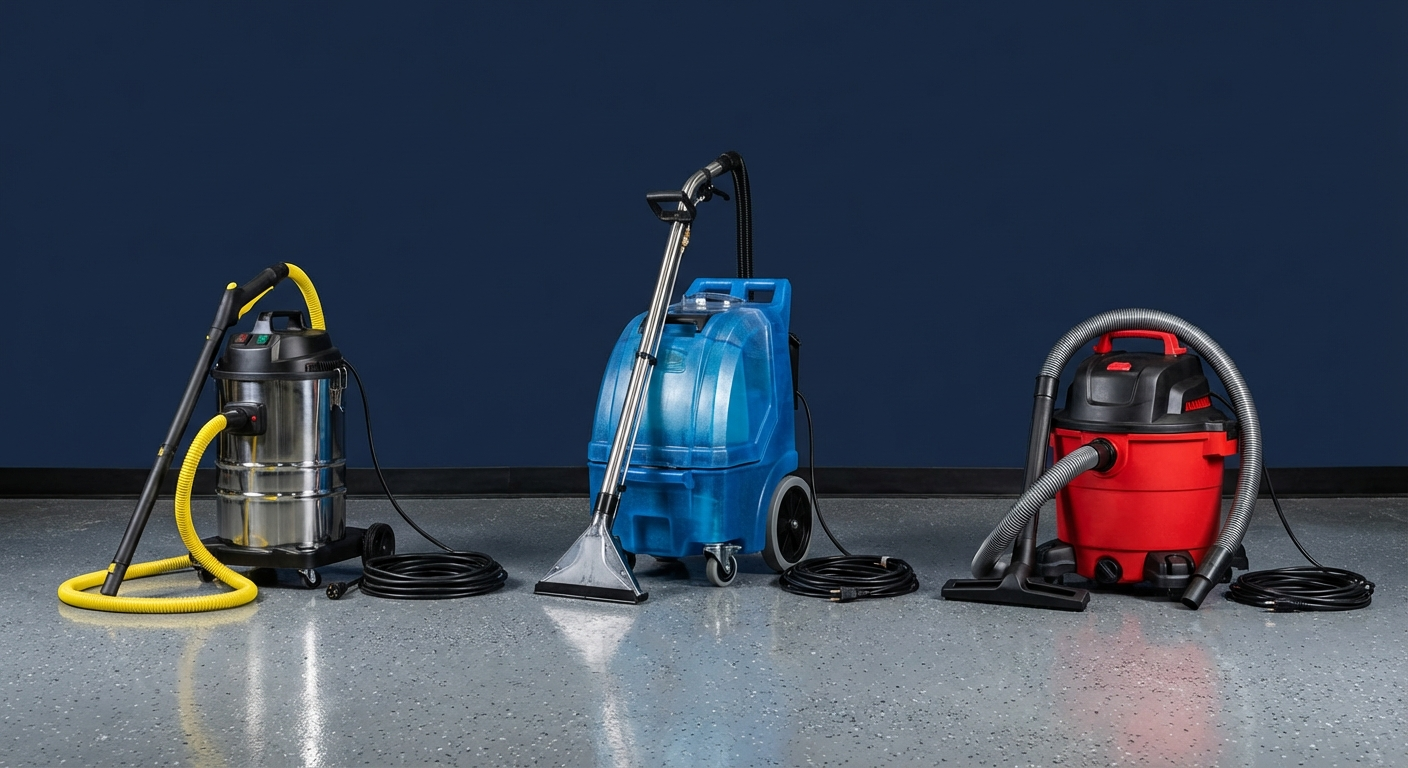
This comprehensive auto detailing equipment buyer's guide covers everything professional detailers and serious enthusiasts need to know before investing in vacuums, carpet extractors, and steam cleaners. Whether you are building a mobile detailing business from scratch or upgrading your existing shop equipment, this guide provides data-driven comparisons, real-world performance metrics, and unbiased recommendations to help you make informed purchasing decisions. We examine the three core equipment categories that form the foundation of any professional auto detailing operation: wet/dry vacuums for debris removal, carpet extractors for deep fabric cleaning, and steam cleaners for sanitization and interior restoration. By the end of this guide, you will understand which equipment combinations match your specific service offerings, budget constraints, and operational requirements.
By the Numbers: The Auto Detailing Equipment Market
The professional auto detailing industry continues to experience significant growth. Understanding the market landscape helps detailers make strategic equipment investments:
| Statistic | Value | Source |
|---|---|---|
| Global car care products market (2024) | $13.2 billion | Grand View Research |
| Projected CAGR through 2030 | 4.8% | Grand View Research |
| Equipment as % of startup costs | 35%-45% | Industry Reports |
| Average mobile detailing startup investment | $8,000-$15,000 | Industry Reports |
| Vehicles processed daily (peak season) | 8-12 per day | Professional Surveys |
| Steam cleaning adoption growth (2020-2024) | 67% increase | Industry Surveys |
| Carpet extractor sales growth (2024 YoY) | 42% | Market Data 2024 |
| Extraction service pricing premium | 40%-60% higher | Detailer Reports |
These numbers reveal why professional-grade equipment matters. With the global car care market exceeding $13 billion and growing at nearly 5% annually, demand for professional detailing services continues to rise. High-quality equipment can reduce service time by 20% to 30%, directly impacting daily revenue capacity. Detailers offering extraction services command 40% to 60% higher pricing on interior packages compared to basic vacuum and wipe-down services.
Understanding the Three Core Equipment Categories
Wet/Dry Vacuums: The Foundation of Interior Detailing
Wet/dry vacuums serve as the workhorse of any detailing operation, handling debris removal, liquid extraction, and general interior cleaning. Professional-grade units typically offer tank capacities between 5 and 20 gallons, with 10 to 12 gallons representing the sweet spot for mobile operations balancing capacity with portability. Motor power ranges from 3.5 to 6.5 peak horsepower, with higher horsepower providing better suction for deep carpet cleaning.
Key features to evaluate include stainless steel or polypropylene tanks for chemical resistance, cartridge or foam filter systems for wet and dry operation, and accessory compatibility with detailing-specific attachments. Entry-level professional units start around $150 to $250, while premium units with heated extraction capabilities range from $400 to $800.
Carpet Extractors: Deep Cleaning Power
Carpet extractors deliver the deep-cleaning performance necessary for restoring heavily soiled upholstery and carpets. Unlike standard vacuums, extractors inject cleaning solution into fabric fibers and immediately recover the dirty solution, removing embedded dirt, stains, and odors.
Professional carpet extractors feature solution tanks ranging from 3 to 12 gallons. Heat capability represents a critical differentiator; heated extractors maintain solution temperatures between 150°F and 210°F, significantly improving cleaning effectiveness on grease and organic stains. Pump pressure ratings indicate solution injection force, with professional units offering 100 to 250 PSI.
Portable extractors designed for automotive use typically weigh between 25 and 60 pounds. Commercial-grade units from Bissell, Mytee, and AquaProVac range from $800 for basic heated portables to $3,500 for multi-function systems with upholstery tools and extended hoses.
Steam Cleaners: Chemical-Free Sanitization
Steam cleaners have revolutionized interior detailing by providing chemical-free sanitization capabilities that eliminate bacteria, allergens, and odors while using minimal water. These systems heat water to 250°F to 310°F, creating dry steam that cleans and disinfects surfaces without saturation.
Professional steam cleaners fall into two categories: vapor steamers producing 95% dry steam with 5% moisture content, and wet steam systems with higher moisture output for heavy cleaning tasks. Continuous-fill systems allow refilling during operation, eliminating downtime for commercial operations.
Leading steam cleaner manufacturers include Dupray, McCulloch, and Ladybug, with professional-grade units priced between $600 and $2,500. Entry-level consumer models start around $150 but lack the durability and continuous operation capabilities required for commercial use.
Equipment Comparison: Matching Tools to Tasks
| Feature | Wet/Dry Vacuum | Carpet Extractor | Steam Cleaner |
|---|---|---|---|
| Primary Function | Debris and liquid removal | Deep fabric cleaning | Sanitization and surface cleaning |
| Water Usage | Minimal (recovery only) | 1 to 3 gallons per vehicle | 0.5 to 1 gallon per vehicle |
| Chemical Requirements | Optional pre-spray | Cleaning solution required | None required (optional) |
| Drying Time | Immediate | 2 to 6 hours | 15 to 30 minutes |
| Best For | General interior prep, water recovery | Heavily soiled carpets and upholstery | Dashboards, vents, leather, sanitization |
| Average Cost (Pro Grade) | $200 to $800 | $800 to $3,500 | $600 to $2,500 |
| Portability | High (most models) | Moderate (wheeled units) | Moderate to high |
| Learning Curve | Low | Moderate | Moderate |
This comparison reveals why most professional detailers eventually acquire all three equipment types. Each addresses specific cleaning challenges, and their combined capabilities enable comprehensive service offerings that command premium pricing.
Key Selection Criteria & Budget Planning
Selecting the Best Car Detailing Vacuum
Choosing the right vacuum requires balancing power, capacity, portability, and budget against your specific operational needs. Mobile detailers prioritize compact size and weight, while fixed-location shops may prioritize capacity and power. Tank capacity directly impacts workflow efficiency. Mobile operators working on 5 to 8 vehicles daily benefit from 10 to 12-gallon tanks that require emptying only once or twice per day. Motor specifications determine suction performance; look for units offering 4.0 peak horsepower or higher with sealed motors designed for wet operation.
Accessory compatibility significantly impacts versatility. Professional detailing requires crevice tools for seat tracks and console gaps, upholstery brushes for fabric seats, and specialized nozzles for pet hair removal. Noise levels matter for residential mobile operations; units operating below 70 decibels allow comfortable conversation and reduce customer complaints.
Carpet Extractor: Key Selection Criteria
Heated versus non-heated extraction represents the first major decision point. Heated units command higher prices but deliver substantially better results on grease, oil, and organic stains common in vehicle interiors. The additional revenue from premium extraction services typically justifies the investment within 6 to 12 months for active operations.
Pump pressure requirements vary by application. Standard automotive upholstery and carpets clean effectively at 100 to 150 PSI. Look for water lift ratings of 100 inches or higher and airflow of 100 CFM or more. Dual two-stage vacuum motors provide superior recovery compared to single-motor units, reducing drying time from 6 hours to 2 to 3 hours.
Steam Cleaner: Features That Matter
Boiler construction material indicates durability and performance consistency. Stainless steel boilers resist corrosion and mineral buildup, maintaining heating efficiency over years of use. Professional units maintain operating pressure between 50 and 95 PSI with temperatures reaching 280°F to 310°F. Continuous-fill capability separates professional units from consumer models, allowing water tank refilling during operation and eliminating cooling cycles that interrupt workflow.
Budget Planning and ROI
A starter professional setup including a quality wet/dry vacuum ($400), portable carpet extractor ($1,200), and entry-level steam cleaner ($800) represents approximately $2,400 in core equipment investment. Mid-tier operations typically invest $5,000 to $8,000, adding heated extraction, higher-capacity vacuums, and commercial-grade steam systems. This investment level supports full-service interior packages commanding $200 to $400 per vehicle versus $75 to $125 for basic services. High-volume shops may invest $10,000 to $15,000 in premium equipment.
Citable Passages
Market Growth and Opportunity
The global car care products market reached $13.2 billion in 2024 and is projected to grow at a compound annual growth rate of 4.8% through 2030, according to Grand View Research. This growth directly correlates with increased demand for professional-grade equipment among both mobile operators and fixed-location detail shops. Professional detailers report that equipment represents 35% to 45% of initial startup costs, with the average mobile detailing business investing between $8,000 and $15,000 in core equipment before opening for operations. Established shops typically allocate 15% to 20% of annual revenue for equipment maintenance, upgrades, and replacements. The average professional detailer processes 8 to 12 vehicles per day during peak season, with each vehicle requiring 45 minutes to 3 hours of work depending on service level.
Equipment Longevity and Maintenance Investment
Professional auto detailing equipment should provide 3 to 7 years of service life under normal commercial use with proper maintenance. Wet/dry vacuums typically last 3,000 to 5,000 operating hours, equivalent to 4 to 6 years for active single-operator businesses. Carpet extractors provide 2,000 to 4,000 hours of service, with heated units requiring more frequent component replacement than cold water systems. Commercial steam cleaners achieve the longest service life at 5,000 to 8,000 hours when maintained properly. Key factors affecting longevity include maintenance adherence, water quality (hard water accelerates wear), usage intensity, and environmental conditions. Following manufacturer maintenance schedules and using filtered or distilled water in steam cleaners and extractors significantly extends equipment life beyond baseline expectations.
Consumer vs Professional Steam Cleaners
Professional-grade steam cleaners differ from consumer models in construction quality, continuous operation capability, and performance consistency. Commercial units feature stainless steel boilers versus aluminum or plastic in consumer models, providing durability for daily use. Professional systems offer continuous-fill operation allowing water refilling during use, while consumer units require cooling and depressurization before refilling. Temperature and pressure stability separates professional units, maintaining consistent 280°F to 310°F output throughout operation, whereas consumer models experience performance degradation as boilers deplete. Commercial steam cleaners include comprehensive accessory sets with professional-grade attachments and typically offer 2 to 3 year warranties versus 90-day to 1-year coverage for consumer units.
Leading Equipment Brands Comparison
AquaProVac
AquaProVac specializes in professional auto detailing equipment, offering comprehensive carpet extractor systems and wet/dry vacuums designed for mobile and shop-based detailing operations. Their product range focuses on the specific needs of automotive cleaning professionals.
- Purpose-built for auto detailing professionals
- Heated extraction systems for premium results
- Comprehensive warranty and support
- Equipment matched to automotive applications
Mytee
Mytee has established itself as a leading manufacturer of portable carpet extractors and cleaning equipment for the auto detailing industry. Their heated extractors are widely used by professional detailers nationwide.
- Industry-leading heated extraction technology
- Durable commercial-grade construction
- Wide range of portable extractors
- Strong dealer and parts network
Bissell
Bissell offers a range of commercial carpet extractors suitable for auto detailing applications. Their BigGreen Commercial line provides professional-grade cleaning performance at competitive price points.
- Competitive pricing for commercial grade
- Widely available parts and accessories
- Established brand with proven reliability
- Multiple models for different budgets
Dupray
Dupray specializes in commercial steam cleaning systems used by professional auto detailers for chemical-free sanitization. Their units are known for consistent steam output and commercial-grade durability.
- Premium commercial steam systems
- Continuous-fill operation capability
- Stainless steel boiler construction
- Comprehensive detailing accessory sets
Maintenance Requirements and Longevity
Wet/Dry Vacuum Maintenance
Wet/dry vacuums require filter cleaning or replacement every 20 to 40 hours of operation. Tank cleaning after each use prevents odor buildup and bacterial growth. Motor brushes require inspection every 500 hours, with replacement typically needed at 1,000 to 1,500 hours. Professional units typically operate 3,000 to 5,000 hours before major repairs.
Carpet Extractor Maintenance
Carpet extractors demand more intensive maintenance due to solution systems and vacuum components. Daily maintenance includes tank cleaning, filter inspection, and hose flushing to prevent chemical buildup. Annual professional service addresses pump seals, vacuum motor maintenance, and heating element inspection. Quality extractors provide 2,000 to 4,000 hours of service with proper maintenance.
Steam Cleaner Maintenance
Steam cleaners require regular descaling in areas with hard water, typically every 40 to 80 hours of operation depending on water hardness. Using distilled or deionized water eliminates scaling issues and extends boiler life significantly. Commercial steam cleaners achieve 5,000 to 8,000 hours when maintained according to manufacturer specifications.
Service Life Summary
Expected service life varies by category. Professional wet/dry vacuums typically operate 3,000 to 5,000 hours before major repairs. Quality carpet extractors provide 2,000 to 4,000 hours of service with proper maintenance. Commercial steam cleaners achieve 5,000 to 8,000 hours when maintained according to manufacturer specifications.
Frequently Asked Questions
A professional auto detailing business requires at minimum a quality wet/dry vacuum with detailing attachments, a carpet extractor for deep cleaning services, and basic hand tools including brushes, microfiber towels, and applicators. This core setup enables interior detailing services that form the foundation of most detailing businesses. Exterior services require additional equipment including a pressure washer, foam cannon, and paint correction tools. Many successful mobile detailers start with approximately $3,000 to $5,000 in total equipment investment and expand their capabilities as revenue grows. Quality equipment selections directly impact service quality, customer satisfaction, and long-term business sustainability. Investing in reliable professional-grade tools from established manufacturers reduces downtime, minimizes repair costs, and establishes credibility with discerning customers who expect dealership-quality results. Starting with essential equipment allows new businesses to generate revenue while building capital for expansion.
The choice between carpet extractors and steam cleaners depends on your target services and customer base. Carpet extractors excel at deep cleaning heavily soiled carpets and upholstery, making them essential for restoration work, pet odor removal, and heavily used vehicle interiors. Steam cleaners provide superior sanitization, chemical-free cleaning, and versatility across multiple surfaces including dashboards, vents, leather, and engines. Many successful detailers eventually acquire both, using extractors for fabric deep cleaning and steam for sanitization and surface detailing. If budget constraints require choosing one initially, carpet extractors offer broader service capability for traditional interior cleaning, while steam cleaners provide unique selling points for health-conscious and eco-friendly customers.
Mobile auto detailing operations benefit most from wet/dry vacuums with 10 to 12-gallon tank capacities. This size provides sufficient capacity for 3 to 5 vehicle interiors without emptying, while remaining compact enough for vehicle transport and residential driveway use. Units in this range typically weigh 15 to 25 pounds without accessories, manageable for single-operator mobile services. Larger 15 to 20-gallon units offer extended capacity but become cumbersome for mobile operations and may exceed residential electrical circuit capacities when combined with other equipment. Smaller 5 to 8-gallon units require frequent emptying that reduces efficiency during busy days.
Heated carpet extractors justify their higher cost for most professional auto detailing operations through improved cleaning performance and increased revenue potential. Heated extraction breaks down grease, oil, and organic stains more effectively than cold water systems, reducing re-work and customer complaints. The ability to offer premium heated extraction services typically commands 25% to 40% higher pricing compared to basic cleaning packages. For operations processing 5 or more vehicles weekly with extraction services, the additional $400 to $800 investment in heated units typically generates return on investment within 3 to 6 months through premium pricing and reduced service time. Cold water extractors remain viable for budget-conscious startups or operations focusing primarily on maintenance cleaning rather than restoration work.
Professional auto detailing equipment should provide 3 to 7 years of service life under normal commercial use with proper maintenance. Wet/dry vacuums typically last 3,000 to 5,000 operating hours, equivalent to 4 to 6 years for active single-operator businesses. Carpet extractors provide 2,000 to 4,000 hours of service, with heated units requiring more frequent component replacement than cold water systems. Commercial steam cleaners achieve the longest service life at 5,000 to 8,000 hours when maintained properly. Key factors affecting longevity include maintenance adherence, water quality (hard water accelerates wear), usage intensity, and environmental conditions. Following manufacturer maintenance schedules and using filtered or distilled water in steam cleaners and extractors significantly extends equipment life beyond baseline expectations. Documented maintenance records also support warranty claims and maximize resale value when upgrading equipment. Preventive maintenance programs reduce unexpected failures and protect your investment.
Professional-grade steam cleaners differ from consumer models in construction quality, continuous operation capability, and performance consistency. Commercial units feature stainless steel boilers versus aluminum or plastic in consumer models, providing durability for daily use. Professional systems offer continuous-fill operation allowing water refilling during use, while consumer units require cooling and depressurization before refilling. Temperature and pressure stability separates professional units, maintaining consistent 280°F to 310°F output throughout operation, whereas consumer models experience performance degradation as boilers deplete. Commercial steam cleaners include comprehensive accessory sets with professional-grade attachments and typically offer 2 to 3 year warranties versus 90-day to 1-year coverage for consumer units. The price differential reflects these construction and capability differences, with professional units starting around $600 versus $100 to $300 for consumer models. Professional units also deliver faster heating times, higher pressure consistency, and superior dry steam quality essential for automotive applications.
Standard shop vacuums can perform basic auto detailing functions, but specialized detailing vacuums offer significant advantages for professional operations. Detailing-specific vacuums typically include quieter operation (important for residential mobile work), compact footprints for vehicle transport, and comprehensive accessory sets with crevice tools, upholstery brushes, and pet hair attachments designed for automotive interiors. Standard shop vacuums often lack the filtration systems necessary for fine dust common in vehicle interiors and may not include wet pickup capabilities essential for extraction work. For hobbyist or occasional use, standard shop vacuums suffice. Professional operations benefit from units designed specifically for detailing applications, with features that improve efficiency, reduce noise complaints, and provide the accessory compatibility necessary for comprehensive interior cleaning. The investment difference of $100 to $300 typically pays for itself within weeks through improved productivity.
Conclusion: Building Your Equipment Arsenal
Selecting the right auto detailing equipment requires matching capabilities to your specific service offerings, operational constraints, and growth plans. This auto detailing equipment buyer's guide provides the foundation for informed decision-making, but individual circumstances ultimately determine optimal equipment choices.
Start with equipment that enables your core service offerings without overextending your budget. A quality wet/dry vacuum and either a carpet extractor or steam cleaner provide sufficient capability to launch professional services and generate revenue. Add complementary equipment as demand validates the investment.
Consider total cost of ownership rather than purchase price alone. Higher-quality equipment with better durability, efficiency, and warranty coverage often proves more economical over a 3 to 5 year ownership period compared to budget alternatives requiring frequent replacement.
The professional detailing equipment market continues evolving with new technologies and improved designs. Stay informed about industry developments through trade publications, manufacturer updates, and peer networks to ensure your equipment remains competitive.
Ready to invest in professional auto detailing equipment? Contact the AquaProVac Team for personalized recommendations based on your specific business needs and budget.
Shop Professional Auto Detailing Equipment