FAST & FREE U.S. Shipping
 Buy Now, Pay Later!
 Price Lock! Beat The Tariffs
 1-Year Warranty
 U.S. Quality & Support
 Now Shipping to Canada
 Call Our Team: (650) 292-4445

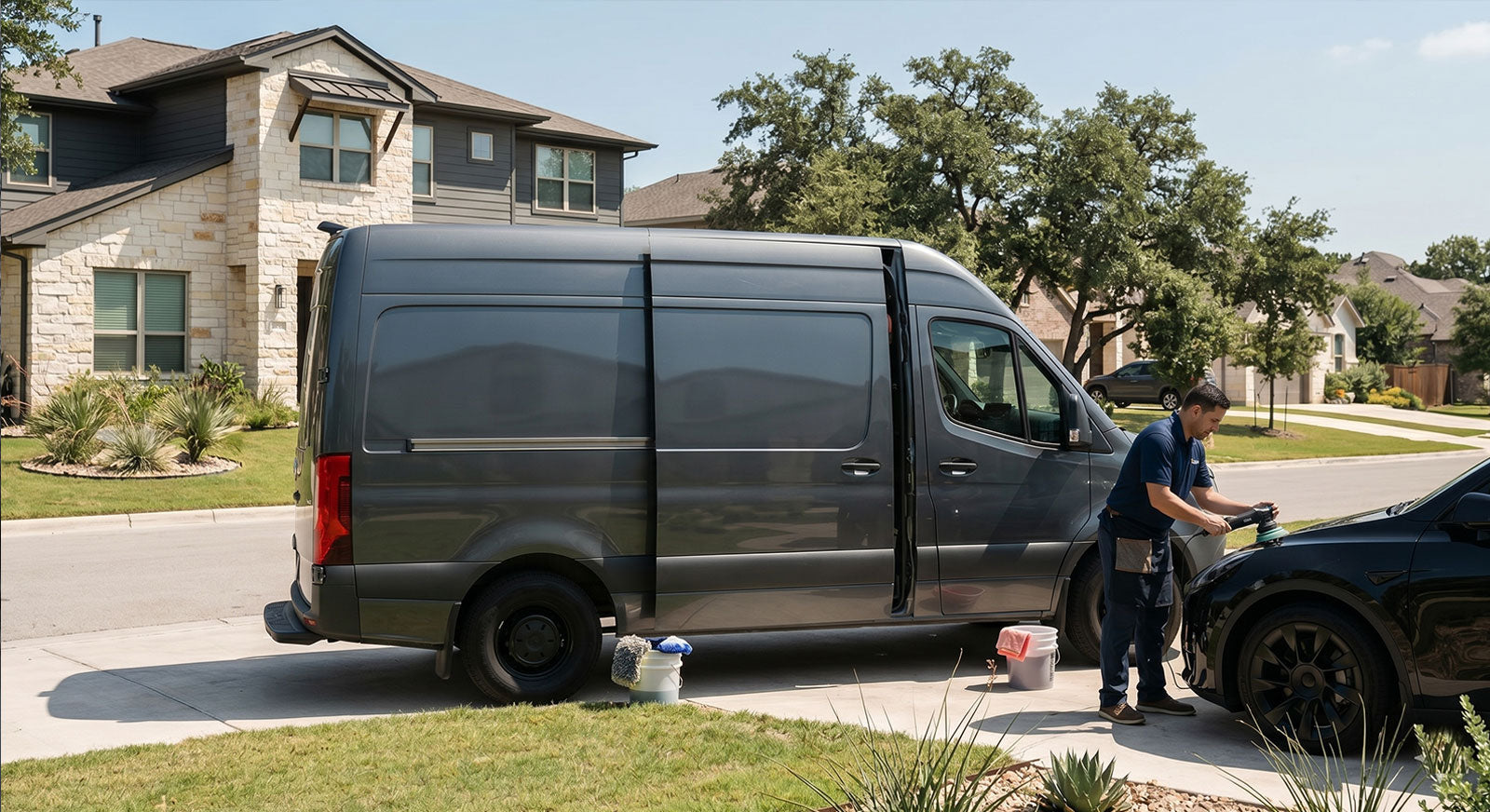
Why Your Van Setup Makes or Breaks Your Business
Your van is your shop, your storage, and your lifeline. Every square foot counts when you're running a mobile detailing business. The right equipment setup means faster job times, better results, and more money per detail.
Most new detailers make the same mistake: they buy consumer tools that break down or can't handle daily commercial use. Professional equipment costs more upfront but pays for itself through reliability and results that let you charge premium prices.
This guide covers the seven tools that separate successful mobile detailers from weekend warriors. Each tool on this list earns its place through real-world performance and return on investment.
The 7 Essential Tools for Mobile Detailing Success
1. Portable Carpet Extractor
Deep cleaning car interiors separates professional detailers from basic wash services. A quality carpet extractor pulls embedded dirt, stains, and odors from seats, carpets, and floor mats.
Why you need it: Interior detailing commands higher prices than exterior work. Customers pay $150-300 for complete interior cleaning when you can show dramatic before-and-after results.
What to look for:
- Lightweight design for easy van loading
- Commercial-grade pump and motor
- Heated cleaning for better extraction
- Multiple attachment tools
Pro tip: Practice your extraction technique on different fabric types. Proper technique prevents over-wetting and reduces drying time between jobs.
2. Commercial Steam Cleaner
Steam cleaning sanitizes surfaces without chemicals, making it perfect for family vehicles and luxury cars. Steam removes grime from door jambs, cup holders, air vents, and leather surfaces.
Why you need it: Steam cleaning adds a premium service tier. Market it as chemical-free sanitization for health-conscious customers, especially post-2026 when cleanliness expectations remain high.
Key features:
- Continuous steam production
- Variable steam control
- Multiple brush attachments
- Quick heat-up time
Best applications: Dashboard cleaning, leather conditioning prep, engine bay detailing, and sanitizing high-touch surfaces like steering wheels and door handles.
3. Wet/Dry Vacuum
A powerful wet/dry vac handles both liquid spills and debris removal. This tool works overtime during interior cleaning, water extraction, and general van maintenance.
Why it's essential: Versatility makes this tool invaluable. Use it for pre-cleaning interiors, extracting water after washing, cleaning your van, and emergency spill cleanup.
Must-have specs:
- Strong suction power (6+ HP)
- Large capacity tank
- Multiple hose attachments
- Durable construction for daily use
Daily uses: Vacuuming seats and carpets, extracting water from floor mats, cleaning up after polishing work, and maintaining your mobile setup.
4. Pressure Washer
Consistent water pressure and flow make exterior cleaning faster and more thorough. A quality pressure washer removes road grime, salt, and stuck-on debris that hand washing can't touch.
Business impact: Faster cleaning means more cars per day. Proper pressure washing also provides better paint preparation for polishing and ceramic coating services.
Essential features:
- 2000+ PSI for effective cleaning
- Variable pressure settings
- Multiple nozzle options
- Reliable pump system
Pro applications: Pre-rinse, foam cannon application, wheel and tire cleaning, undercarriage washing, and final rinse.
5. Dual Action Polisher
Paint correction and protection services generate the highest profit margins in detailing. A dual-action polisher safely removes swirl marks, scratches, and oxidation while applying protective coatings.
Revenue potential: Paint correction services range from $200-800 depending on vehicle size and condition. Master this tool to access premium market segments.
Key specifications:
- Variable speed control
- Ergonomic design for extended use
- Reliable motor for consistent performance
- Multiple backing plate sizes
Service expansion: Paint correction, ceramic coating prep, wax application, and headlight restoration all require quality polishing equipment.
6. Professional Lighting Setup
Proper lighting reveals defects, ensures complete cleaning, and creates impressive before-and-after photos for marketing. LED work lights also extend your working hours into evening appointments.
Why lighting matters: You can't fix what you can't see. Professional lighting helps you deliver consistent results and spot issues before customers do.
Lighting essentials:
- LED panels for broad coverage
- Rechargeable batteries for portability
- Adjustable stands and mounting options
- Color temperature around 5000K
Business benefits: Evening appointments, better quality control, impressive customer demonstrations, and social media content creation.
7. Water Tank System
Reliable water supply keeps you working when customers don't have accessible water sources. A proper tank system includes fresh water storage and waste water collection.
Independence factor: Water independence means you can work anywhere. This opens opportunities in office complexes, apartment buildings, and special events.
System components:
- Fresh water tank (40+ gallons)
- Waste water collection
- 12V pump system
- Hose management and storage
Operational advantage: Work in locations competitors can't reach, schedule back-to-back appointments without water source concerns, and maintain consistent water pressure throughout the day.
Building Your Mobile Arsenal
Start with the extraction and steam cleaning equipment first. These tools immediately differentiate your services from basic car washes and generate higher revenue per job.
Focus on commercial-grade equipment built for daily professional use. Consumer tools break down quickly under commercial demands and cost more long-term through replacements and lost work time.
Consider financing options and business starter packages that bundle essential equipment. Many suppliers offer Buy Now Pay Later terms that align equipment payments with business cash flow.
Plan your van layout before buying equipment. Measure your space, consider power requirements, and design efficient storage that protects your investment while keeping tools accessible.
For professional-grade carpet extractors, steam cleaners, and wet/dry vacuums built specifically for mobile detailing businesses, check out the commercial equipment options at aquaprovac.com. Their lightweight, portable designs are engineered for daily professional use with the reliability mobile detailers need to stay profitable.
Frequently Asked Questions
What core detailing equipment list should every mobile detailer carry in their van in 2026?
Every detailer should have a compact car detailing equipment list that covers exterior and interior detailing: buckets with grit guards, a high-quality vacuum cleaner for carpet and upholstery, microfiber towels, wash mitts, foam pads, an orbital polisher, clay bar or clay mitt for embedded contaminants, spray sealant, a few pro-grade soaps and pH-balanced shampoos, applicator pads, brushes for cracks and crevices, a containment mat, and a portable generator or inverter for the power you need. This list helps you handle dirt and grime, streak issues on glass and mirrors, and basic defect removal on paintwork.
Which pro-grade car detailing tools are essential for paintwork and gloss restoration?
For paintwork and achieving lasting gloss, you'll need an orbital polisher with compatible foam pads, microfiber towels, polish and compound, a clay bar for embedded contaminants, applicators for sealant or wax, and backing plates. These car detailing tools let you remove swirls and defects, reduce streaks, and apply sealant evenly for durability. Keep spare foam and microfiber to avoid cross-contamination.
What do I need to start a mobile detailing business and offer a pro detailing service?
To start your detailing business, you'll need a detailing arsenal that includes car detailing equipment list items plus business essentials: a containment mat, a water management system, a generator or reliable power source, cleaning supplies and chemicals, a professional vacuum cleaner for upholstery and carpet and upholstery, insurance, branding, a pricing structure, and a mobile point-of-sale. Training in defect removal, UV-safe products, and customer service will help your detailing service stand out in the detailing world.
How do I set up an efficient mobile car wash workflow that minimizes grit and residue?
An efficient car wash workflow uses the two-bucket method with grit guards, pH-balanced soaps to prevent streaks, dedicated wash mitts and sponges for different zones, and immediate drying with microfiber towels to avoid water spots. Start from top to bottom, rinse thoroughly between steps to prevent grit transfer, and use clay bar only after contaminant removal to avoid embedding grit into the paintwork. This workflow reduces residue and protects finishes.
Which brushes and small tools are best for cleaning cracks and crevices and upholstery seams?
Detailers should stock a variety of brushes: soft boar-hair brushes for delicate trim, stiff nylon brushes for carpet and upholstery, small detail brushes for vents and seams, and foam applicators for tight spots. Use brushes with long handles or flexible heads to reach hard-to-reach areas and remove dirt and grime without damaging materials. Combine with targeted sprays and a vacuum cleaner to lift loosened debris.
How can detailers prevent streaks and ensure a uniform gloss when finishing exterior panels?
Prevent streaks by using pH-balanced soaps, clean microfiber towels, and a proper drying method (blot then wipe) with plush towels. Apply sealant or wax with applicator pads in thin, overlapping passes and remove residues promptly with a clean microfiber to reveal uniform gloss. Working in shade and avoiding direct sun reduces streaking and improves working time for polishes and sealants.
What applicator types should I keep for sealants, dressings, and interior protectants?
Keep a variety of applicators: soft foam pads for sealant and wax, microfiber applicators for interior dressings, suede or microfiber for leather touch-up, and small sponge applicators for crevices. Disposable or washable applicators prevent cross-contamination of chemicals and reduce residue. Match applicator texture to product—dense foam for polish and softer for dressings—to get professional results.
How important is a generator or portable power for a mobile car detailing business?
Power you need in the van is critical—an onboard generator or high-output inverter allows you to run an orbital polisher, vacuum cleaner, extractor, and heated steamers. Without reliable power, you limit service scope and pro-grade results. Choose a quiet, efficient generator sized for your largest tools and include surge protection to safeguard electronics and detailing shop equipment on location.
What are the first steps and everything you'll need to start your detailing venture in 2026?
To start your detailing venture, assemble a starter car detailing equipment list: two buckets with grit guards, wash mitts, microfibers, a vacuum cleaner, an orbital polisher, a clay bar, basic polish and sealant, brushes, applicators, a containment mat, a generator, and a stock of soaps and UV-safe protectants. Also secure insurance, create service packages (exterior and interior detailing options), and plan logistics like water usage and waste containment to offer compliant, pro-grade detailing service.
How do I choose the right detailing products and cleaning supplies for different surfaces?
Choose products formulated for the substrate—use pH-balanced shampoos for paint and glass, dedicated leather cleaners and conditioners for upholstery, and carpet and upholstery shampoos for fabric seats. For hard-to-reach areas and electronics, use low-moisture sprays and soft brushes. Always test on inconspicuous spots to avoid damage, and pair each chemical with the correct applicator, towel, or sponge to prevent residue and maintain a professional finish.
Start Strong, Stay Mobile
Your mobile detailing success depends on having the right tools for professional results. These seven essential pieces of equipment form the foundation of a profitable mobile business that can compete with fixed-location shops.
Invest in commercial-grade equipment from the start. Your customers, your back, and your bottom line will thank you. Focus on mastering each tool's capabilities before expanding your service menu.
Remember: your van setup is your competitive advantage. Make it count.