FAST & FREE U.S. Shipping
 Buy Now, Pay Later!
 Price Lock! Beat The Tariffs
 1-Year Warranty
 U.S. Quality & Support
 Now Shipping to Canada
 Call Our Team: (650) 292-4445

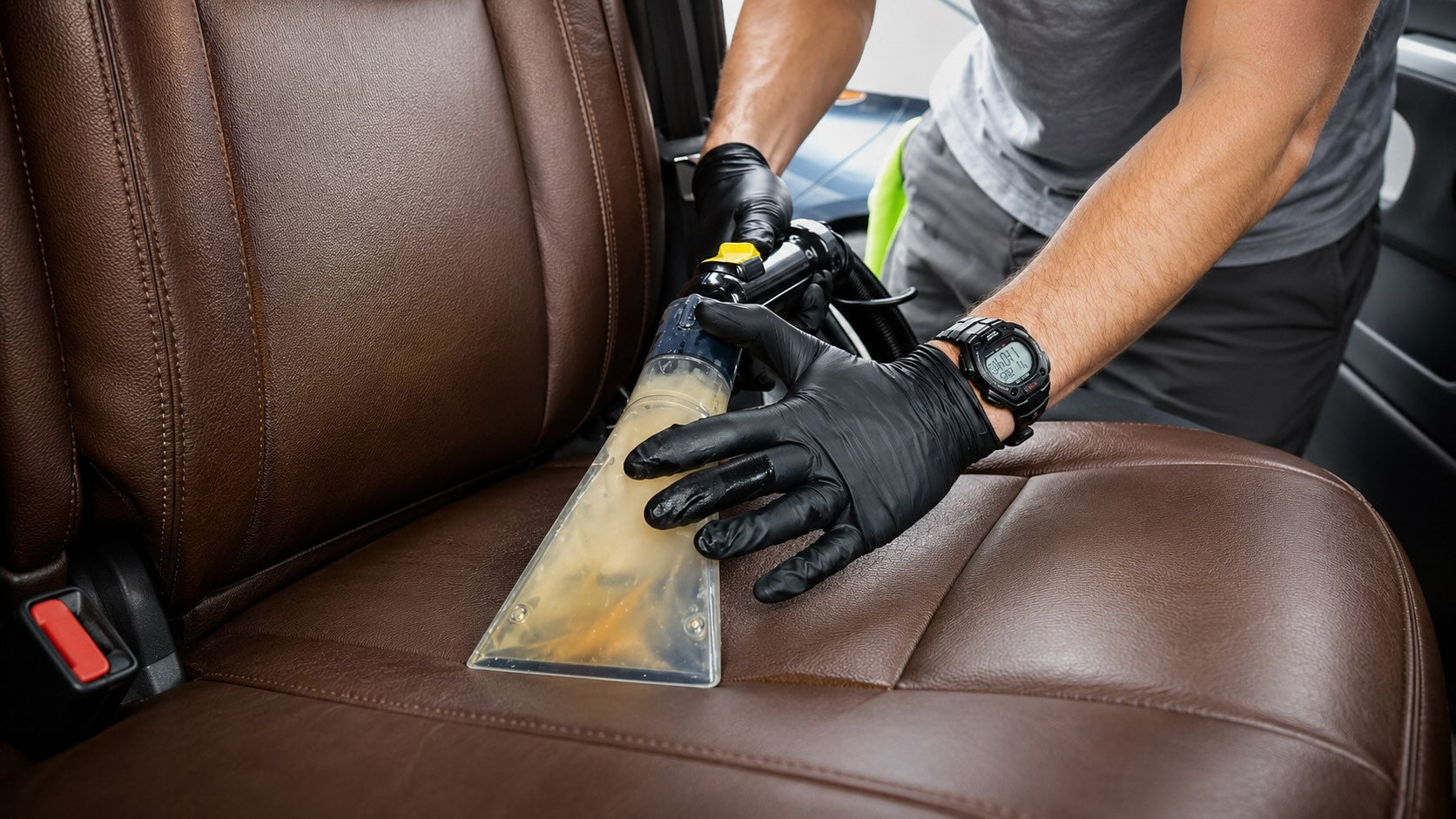
Scrubbing car seats with a brush and a spray bottle only moves dirt around. If you want results that actually impress clients and justify a premium price, you need to extract. Here is exactly how to do it.
Why Extraction Beats Every Other Method
Fabric car seats trap dirt, oils, pet hair, food residue, and odors deep in the fibers. Surface cleaning does not reach any of that. A portable carpet extractor, along with a spray bottle and agitator, injects cleaning solution into the fabric and pulls it back out, along with everything it has loosened. That is a genuinely deep clean, not a surface refresh.
For detailers, that difference matters. Clients can feel and smell the result. That is what earns repeat bookings and referrals.
What You Need Before You Start
Get these ready before you touch the seats:
- A portable carpet extractor with an upholstery tool attachment
- Upholstery-safe cleaning solution (check the label for fabric compatibility)
- A stiff-bristle upholstery brush for agitation
- A dry microfiber towel for blotting
- A wet/dry vacuum for initial debris removal
If you are running a mobile detailing operation, portability matters. A lightweight, commercial-grade extractor you can carry from car to car without wrecking your back is not a luxury; it is a practical requirement.
Step 1: Vacuum and Pre-Treat
Start dry. Use a wet/dry vacuum to pull out loose debris, crumbs, and pet hair before any moisture touches the seat. Skipping this step means you are extracting wet, loose dirt instead of lifting embedded soil and stains, which makes the job harder.
Once the seat is vacuumed, apply your upholstery cleaning solution. Mist it evenly across the fabric and let it dwell for two to three minutes. Do not soak the seat. You want the solution to penetrate the fibers, not saturate the foam underneath.
Agitate with your upholstery brush using short, overlapping strokes. Work in one direction first, then cross-hatch. This breaks up embedded grime and gives the extractor something to pull out.
Step 2: Set Up Your Extractor
Fill your extractor's clean water tank with cool, clean water. If you are in an area with a high TDS, think about using a DI tank to create pure water.
Attach the upholstery tool. This is a narrower, lower-profile head designed to work in tight spaces like seat creases, door panels, and headrests. If you are using a commercial-grade portable extractor, the tool should lock in securely without any wobble.
Set your water temperature if your machine allows it. Warm water improves solution activation and helps lift oils more effectively than cold.
Step 3: Extract the Right Way
This is where most detailers either nail it or leave results on the table.
Make slow, overlapping passes with the upholstery tool. The slower you move, the more suction time the machine has to pull moisture and contaminants back out. Fast passes leave water in the fabric and reduce cleaning effectiveness.
Work in sections. Do one seat panel completely before moving to the next. Keep your passes consistent, roughly two inches of overlap between each stroke.
Watch your recovery tank. Dirty water should be coming back dark, especially on the first pass of a heavily soiled seat. If the recovery water is running clear immediately, either the seat was already clean or your solution did not dwell long enough. Make sure to empty the dirty water tank so it does not overflow.
For a commercial-grade portable extractor built for this kind of work, Aqua Pro Vac makes lightweight machines designed specifically for auto detailing and upholstery cleaning. The portability is real, not just a marketing claim, which matters when you are moving between vehicles all day.
Step 4: Handle Tough Stains on Fabric Seats and Door Panels
Coffee, grease, ink, and pet stains need targeted treatment before extraction.
- Coffee and food stains: Apply an enzyme-based upholstery cleaner directly to the stain. Let it dwell for five minutes, agitate gently, then extract.
- Grease and oil: Use a degreaser diluted for fabric. Blot first to absorb excess oil before applying the degreaser.
- Ink: Isopropyl alcohol on a microfiber towel, blotting from the outside of the stain inward. Extract after.
- Pet stains and odor: Enzyme cleaners are your best option here. They break down the organic material causing the smell rather than masking it. Extract thoroughly after dwell time.
Door panels need a lighter touch. Most door panel fabric is thinner and can over-saturate quickly. Use minimal solution, agitate gently, and extract immediately.
Step 5: Dry It Properly
Wet fabric left sitting grows mildew fast. After extraction, blot the seats with a dry microfiber towel to pull out surface moisture.
Then get air moving. Open all doors and windows. If you have a portable fan, position it to push air across the seats. In warm weather, seats can dry in one to two hours. In cold or humid conditions, plan for longer.
Do not return the vehicle to the client with damp seats. A damp interior is a complaint waiting to happen.
Common Mistakes Detailers Make
- Overwetting the fabric. Too much solution leaves residue and extends drying time.
- Moving too fast with the extractor. Slow passes pull more out. Speed is not your friend here.
- Skipping the pre-vacuum. Wet debris is harder to extract than dry debris.
- Using the wrong tool head. A carpet wand on a car seat leaves water in the foam. Use the upholstery attachment.
- Not checking the recovery tank. A full tank reduces suction. Empty it between seats on heavily soiled jobs.
FAQs
How do I clean car seats like a pro without damaging fabric car seats?
Start by removing loose dirt and dust with a vacuum using a crevice tool for seams and seat padding edges. Test your cleaner on a hidden spot to ensure it won't discolor the cloth seats. For fabric clean methods, spray cleaner directly onto a soft brush or absorbent microfiber cloth rather than saturating the seat, scrub gently in a circular motion, then blot with a clean cloth to remove dirty solution drips. For pro-level results, finish by rinsing lightly with a damp cloth and allow the seats to dry fully in a well-ventilated area to avoid musty smells.
What cleaner should I use to remove stubborn stains from car seats?
For stubborn stains, use a dedicated upholstery cleaner or a gentle household product like diluted dish soap or an upholstery shampoo. Apply cleaner directly onto a cloth to avoid oversaturating the pad, let it sit briefly on the stain, then scrub with a drill brush or soft brush for extra attention. For grease or oil, sprinkle baking soda to absorb mess before vacuuming and then treat with cleaner. Always rinse or blot to remove residue and dry completely to prevent re-soiling.
How can I scrub fabric car seats without leaving excess moisture or damaging the cushion?
Use a soft brush or a drill brush on low speed for larger areas, working from the top down and starting at the top so dirty water doesn't drip onto cleaned areas. Wipe away any excess moisture with an absorbent microfiber cloth and use a wet/dry vacuum to remove excess moisture and avoid excess moisture being trapped in the seat padding. Speed up the drying process by opening windows and using fans so the seats dry fully and don't develop a musty odor.
What extraction tips actually work to clean longer and keep car seats fresher?
Extraction machines that remove water and cleaning solution are ideal for deeper cleaning to clean longer between treatments. Use a hot-water extraction method for cloth seats and repeat over high-traffic spots until minimal dirty water is extracted. After extraction, remove as much water as possible with a clean towel and let it air dry in a well-ventilated area or use fans to speed up the process. Regular seat cleaning seasonally helps keep your car care routine pro-level.
How do I treat spills and stains on cloth seats quickly to avoid discoloration and set-in stains?
Blot fresh spills immediately with a cloth to absorb liquid; do not rub or scrub until you've blotted. For sticky spills, let it sit for a minute if needed, then blot and apply a cleaner sparingly. Use a pad or microfiber cloth to lift away residue and repeat until the spot is gone. For kids' or pets' messes, address spills and stains quickly to prevent seat padding from absorbing odors or staining deeply.
When should I allow the seats to dry fully, and how can I speed up drying?
Allow the seats to dry completely before using the car to prevent mildew or odor. Remove excess moisture with a towel and vacuum, then leave windows open in a well-ventilated area or use fans and dehumidifiers to speed up the drying process. For faster results on larger areas, park in sun or use a portable heater, but avoid direct UV heat that can fade leather seats; for cloth seats, ensure they dry fully to avoid a musty smell.
Are there pro tips for cleaning fabric that help remove hidden odors or musty smells?
To remove hidden odors, sprinkle baking soda over the cloth seats and let it sit for several hours or overnight to absorb smells, then vacuum thoroughly. For musty upholstery, use an enzymatic cleaner designed for organic spills, follow with extraction if possible, and allow the seats to dry fully. Rotate cleaning methods seasonally and focus on crevices and mats where dust and spills collect for a fresher car interior.
How do I protect cleaned seats and keep them clean longer after seat cleaning?
After cleaning fabric car seats, consider applying a fabric protectant to repel spills and stains and reapply seasonally. Remove dust regularly, use seat covers if you have kids or pets, and clean spills immediately. Keep an absorbent microfiber cloth and a small spray bottle of cleaner in the car for quick touch-ups. Regular maintenance and addressing dirty solution drips promptly will help your seats stay cleaner longer and preserve the seat cushion and overall car care.
The difference between a decent interior detail and one that gets you referrals comes down to how deep you clean. Extraction is the method. The right equipment makes it faster, more consistent, and worth charging more for.
Learn more about commercial-grade portable extractors built for detailing work at aquaprovac.com.