FAST & FREE U.S. Shipping
 Buy Now, Pay Later!
 Price Lock! Beat The Tariffs
 1-Year Warranty
 U.S. Quality & Support
 Now Shipping to Canada
 Call Our Team: (650) 292-4445

The smoke smell is one of the hardest odors to remove from a vehicle interior — and it is not a surface problem. Cigarette and cannabis smoke deposit microscopic particles deep into every porous material in the cabin: carpet fibers, seat foam, headliner fabric, door panel padding, and the HVAC system. Every time the fan runs, those particles recirculate through the air.
Air fresheners do not fix this. Neither does a single wipe-down. A complete smoke removal job means working through every contaminated surface in the correct order. This guide walks you through that process, whether you are cleaning your own vehicle or charging a client for a professional detail.
Why Smoke Smell Is So Hard to Remove
Smoke particles are extremely small — small enough to penetrate fabric well beyond what surface cleaning can reach. In a car, that means:
- Carpet and floor mats absorb smoke residue directly into the pile and backing
- Seat upholstery and foam trap particles below the surface layer
- The headliner is foam-backed fabric that holds odor readily and is easily damaged by excess moisture
- HVAC vents and ducts circulate smoke-contaminated air throughout the cabin
- The cabin air filter collects smoke particles and reintroduces them every time the fan runs
- Plastic and vinyl trim hold a thin film of tar and residue that off-gasses over time
You have to address all of these. Skip one and the smell returns within days.
Why Air Fresheners Don't Work
Air fresheners mask odor—they do not eliminate its source. The smoke particles remain in the carpet, the seats, and the headliner. Once the fragrance fades, the smell comes back.
Ozone treatments and odor bombs work differently: they oxidize odor-causing molecules rather than covering them up. But even ozone only works effectively after the physical contamination has been removed first. Running an ozone treatment in a car with smoke-saturated carpet means treating the air while the source remains untouched. The smell will return.
The correct sequence is straightforward: remove the physical contamination first, then neutralize what remains. That logic drives every step in this guide.
Step-by-Step: How to Remove Smoke Smell from a Car
Step 1: Air the Vehicle Out
Open every door and window and the trunk. Let the car breathe for at least 30 minutes before you start. This drops the concentration of airborne particles and makes the working environment more manageable.
Pull the floor mats out and set them aside. You will clean them separately.
Step 2: Dry Vacuum Everything
Before any moisture goes in, dry vacuum the entire interior. Use a strong shop vac or wet-dry vacuum to pull loose debris, ash, and surface particles from the carpet, seats, and crevices.
Work the seat seams, the gap between the seat base and backrest, and the area under the seats. Ash and debris collect in all of those spots. Skip this step and you push contamination deeper the moment you apply liquid cleaner.
Step 3: Pre-Treat Fabric with an Enzyme Cleaner
Apply an enzyme-based odor eliminator to all fabric surfaces: carpet, floor mats, and upholstery. Enzyme cleaners break down organic compounds at the molecular level, which is exactly what smoke residue requires.
Spray the cleaner, agitate with a stiff brush, and let it dwell for the time listed on the product label. Do not rush the dwell time. The chemistry needs contact time to do its job.
Step 4: Extract Carpet and Seats with a Portable Carpet Extractor
This is the most important step. Extraction pulls dissolved contamination out of the fabric. Without it, the enzyme cleaner and the smoke residue sit in the material and dry right back in.
A portable carpet extractor injects cleaning solution into the fabric and immediately vacuums it back out. For auto detailing, you need a machine compact enough to work inside a vehicle and powerful enough to pull moisture from seat foam and carpet backing.
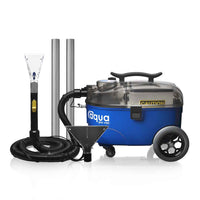
The Portable Carpet Extractor for Auto Detailers from Aqua Pro Vac is built for this exact application. It handles both carpet and upholstery, fits inside a vehicle without fighting for space, and pulls contamination out of the material rather than just moving it around.
Extract the carpet in overlapping passes. Do the same on the seats. On heavily smoked vehicles, a second pass with clean water helps flush out residual cleaner and loosened particles.
Note: the extractor does not heat water internally. For sanitization and odor treatment on hard surfaces, that is where the steam cleaner comes in.
Step 5: Steam Clean Hard Surfaces and Vents
Steam reaches gaps that a cloth cannot. That matters for HVAC vents, door panel crevices, dashboard seams, and plastic trim.
Use a steam cleaner on all hard surfaces. Direct the nozzle into each vent opening. The heat and pressure break up smoke film on plastic and kill bacteria that contribute to the odor.
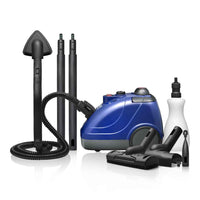
The Aqua Pro Steamer Carpet Cleaner handles this step. It produces high-temperature steam, works on both hard surfaces and fabric, and is portable enough to move through the entire cabin without getting in your way.
Run it along the dashboard, center console, door panels, and directly into each vent. Wipe surfaces immediately after steaming to lift the loosened residue off.
Step 6: Treat the Headliner
The headliner needs a light touch. It is foam-backed fabric glued to the roof panel. Too much moisture causes it to sag or delaminate.
Use a light mist of enzyme cleaner and a soft microfiber cloth. Work in small sections. Blot rather than scrub. You can also use a steam cleaner on a low setting held several inches from the surface, moving quickly to avoid saturating the material.
Do not soak the headliner. One careful pass is enough for most jobs.
Step 7: Replace the Cabin Air Filter
This step gets skipped more than any other. The cabin air filter traps smoke particles every time the HVAC system runs. A contaminated filter keeps reintroducing odor into the cabin.
Find the cabin air filter — usually behind the glove box or under the dashboard — pull it out, and replace it. It is a low-cost part that makes a real difference in the final result.
Step 8: Ozone Treatment or Odor Bomb
Once all physical contamination is gone and surfaces are dry, an ozone generator or odor bomb handles any remaining airborne and residual odor molecules.
Run the ozone treatment with the HVAC fan on recirculate so the treated air moves through the duct system. Follow the product instructions for treatment time and ventilation before anyone gets back in the vehicle.
This step works because the contamination source has already been removed. The ozone is finishing the job, not doing the whole job.
How to Offer Smoke Removal as a Paid Service
Smoke removal is a high-margin add-on for any detailing business. The job takes longer than a standard interior detail and uses more chemistry, so it justifies a premium price.
Most detailers charge between $150 and $400 depending on vehicle size and contamination level. Heavily smoked vehicles with years of buildup can push that number higher.
To offer this service consistently, you need:
- A portable carpet extractor that handles both carpet and upholstery
- A steam cleaner for vents and hard surfaces
- An enzyme-based odor eliminator
- An ozone generator or odor bomb for the final treatment
- A reliable supply of cabin air filters or a referral to a shop that can swap them
The equipment pays for itself fast. One smoke removal job at $200 covers a significant portion of your gear cost. Every job after that is profit on equipment you already own.
If you are starting a detailing business and want both extraction and steam capability without sourcing gear from multiple vendors, the Auto-Detailing Starter Business Package at Aqua Pro Vac includes both the portable extractor and the steam cleaner in one bundle, starting at approximately $1,043 with free U.S. shipping and a 1-year warranty.
Common Mistakes to Avoid
Using only an air freshener. It masks the smell for a few days. The contamination stays put.
Skipping the dry vacuum. Applying liquid cleaner over loose debris pushes it deeper into the material.
Not letting enzyme cleaner dwell. Wiping it off too soon means the chemistry never had time to break down the odor compounds.
Over-wetting the headliner. Too much moisture causes sagging. Light application and quick blotting are the right approach.
Running an ozone treatment before cleaning. Ozone treats air and residual molecules. It does not pull embedded contamination out of carpet and foam.
Forgetting the cabin air filter. A contaminated filter undoes a significant portion of your work within days.
FAQs
How long does it take to remove smoke smell from a car?
A thorough smoke removal job takes three to five hours on a standard vehicle. Heavily smoked interiors may need two sessions. Drying time after extraction adds another two to four hours before the ozone treatment can run.
Does steam cleaning remove smoke smell from car interiors?
Steam cleaning removes smoke film from hard surfaces and vents and helps treat fabric. It works best as part of a complete process that includes extraction for carpet and upholstery. Steam alone does not pull contamination out of deep carpet fibers the way extraction does.
Can you remove smoke smell from a car without a carpet extractor?
You can reduce the smell, but you cannot fully remove it. Enzyme cleaners applied without extraction leave dissolved contamination sitting in the fabric. An extractor pulls that contamination out. For a professional result, extraction is not optional.
How much should I charge for smoke removal detailing?
Most independent detailers charge $150 to $400 depending on vehicle size and severity. Heavily contaminated vehicles or those with years of buildup can justify higher pricing. Price the job based on your time and chemistry cost, not just vehicle size.
Does an ozone treatment permanently remove smoke smell?
Ozone removes residual odor molecules in the air and on surfaces. It works best after physical contamination has already been removed through extraction and cleaning. If the carpet and seats are still contaminated, the smell returns once the ozone dissipates.
How do I prevent smoke smell from coming back after cleaning?
Replace the cabin air filter after every smoke removal job. Make sure all fabric surfaces are fully dry before closing the vehicle. A second extraction pass with clean water helps flush residual cleaner and particles. Running the HVAC system after the ozone treatment ensures treated air moves through the duct system.
How does an extractor help remove the smoke smell from a car?
A carpet extractor (wet extractor) helps remove smoke odor by flushing and extracting grime, tar, nicotine, and other odor-causing contaminants trapped deep within fabric seats, upholstery, and carpets. It sprays a cleaning solution into the material and immediately vacuums it back out, removing contaminated water before odors can settle beneath the surface. For best results, thoroughly extract the seats, carpets, floor mats, and hard-to-reach areas such as under the seats, then allow the interior to dry completely. For stubborn smoke odors, using a steam cleaner beforehand can help loosen built-up residue before extraction.
Can I use an extractor on leather seats without damaging them?
Yes, but use a dedicated automotive leather cleaner and a gentle extractor setting — avoid excess heat and harsh chemical cleaners that can discolor or leave sticky residue. Always test in an inconspicuous area first, clean gently and follow with a leather conditioner to restore oils the cleaning removed; this methodically removes cigarette smoke without leaving the leather dry or damaged.
What preparatory steps should I take before extracting to remove cigarette smoke?
Remove ash, trash and sticky residue from compartments and door pockets, vacuum thoroughly to get dirt and loose grime out, and wipe surfaces with a mild interior cleaner. Treat fabric seats and upholstery with a suitable pre-spray or diluted vinegar solution for odor removal on stubborn smells, then extract — this helps the extractor penetrate fibers and eliminate the underlying smell rather than just masking it.
Which cleaning products and settings are safest and most effective to remove the smoke smell?
Use automotive-grade interior cleaner or a mild soap solution and a steam or wet extractor with adjustable suction; avoid strong chemicals that can be harsh on fabrics and leather. For fabric seats use deeper extraction; for leather seats use low-moisture extraction and a leather-specific product. Use the right nozzle for seams and crevices, tackle door pockets and the ventilation system, and always follow product instructions for safer, thorough odor removal.
How do I handle smoke odor in the ventilation system and compartments?
Smoke odor often settles in the ventilation system and in small storage compartments beneath and behind panels. Before or after extracting surfaces, run the fan with fresh air, replace cabin air filter, vacuum air intake areas, and if possible use an extractor attachment or a dedicated HVAC cleaner to remove deposits. For persistent smells, a professional cleaning of the ventilation system or replacing the cabin filter helps prevent smoke from re-entering the car's interior.
What should I do if the smoke smell still lingers after extracting?
If the smell remains, repeat extraction on high-traffic areas and treat with odor-neutralizing solutions (vinegar solutions, enzyme cleaners or automotive odor removal products) applied lightly and then extracted; avoid over-wetting. Check for hidden sources such as behind trim, under the rear seats or in fabric storage areas, clean methodically, allow thorough drying with good airflow, and consider professional ozone or thermal treatments only after attempting safer, less harsh methods to eliminate stubborn smells.
Smoke removal is a skill that pays well and separates your business from detailers who only offer standard interior cleans. The process is straightforward once you have the right equipment and follow the correct sequence.
If you are ready to add smoke removal to your service menu, start with gear that handles both extraction and steam. See the Auto-Detailing Starter Business Package at aquaprovac.com and get everything you need to take on smoke jobs from day one.