FAST & FREE U.S. Shipping
 Buy Now, Pay Later!
 Price Lock! Beat The Tariffs
 1-Year Warranty
 U.S. Quality & Support
 Now Shipping to Canada
 Call Our Team: (650) 292-4445

A carpet extractor is one of the biggest investments a detailing or cleaning business makes, and how you store it between jobs can affect how long it lasts. Toss it in a van still wet with dirty water in the tank, and you're setting yourself up for odors, mold, and premature wear. Leave it in an unheated garage over the winter, and a hard freeze can crack a pump or seal that costs far more to replace than a few minutes of prep would have cost to prevent.
Knowing how to store a carpet extractor properly, both for quick turnarounds between jobs and for longer off-season downtime, protects your equipment and keeps it ready to perform when you need it. This guide walks through both situations step by step, plus the storage mistakes that quietly shorten a machine's lifespan.
Why Proper Carpet Extractor Storage Matters
Storage might seem like an afterthought compared to the cleaning work, but it directly affects how reliable your equipment stays over time.
Protecting Your Investment
A quality carpet extractor is a real financial investment, and how you store it affects how long that investment keeps paying off. Tanks, hoses, seals, and motors all degrade faster when they're stored dirty, wet, or exposed to temperature extremes. Good storage habits are one of the simplest, lowest-cost ways to protect that investment.
Preventing Mold, Mildew, and Odors
Recovery tanks and hoses hold dirty water and organic material by design. If that moisture is sealed inside a closed unit, it creates the environment mold, mildew, and bacteria need to grow. The EPA's working guideline for water damage is that wet materials dried within 24 to 48 hours generally won't grow mold, and while a plastic tank isn't something mold feeds on, the soil residue coating the inside absolutely is. Beyond the unpleasant smell, that buildup can work its way into seals and gaskets and break them down faster than they should.
Avoiding Costly Repairs and Downtime
An extractor that's stored improperly is far more likely to develop a leak, a clogged line, or a failed pump right when you need it most. For a working business, that kind of downtime doesn't just mean a repair bill. It means rescheduling customers, or worse, losing them to a competitor who can show up on time.
The Two Water Rules That Protect the Machine
Almost every storage mistake that damages an extractor traces back to one of two things going into the machine that shouldn't. Both are worth stating plainly before the step-by-step, because they apply equally to the between-job routine and the off-season deep clean.
Plain water in the tank, always. On the Aqua Pro Vac, the manufacturer's instruction is unambiguous: "Do not put detergent into the machine. No defoamer is needed." Mix detergent with water in a spray bottle, spray it onto the area to be cleaned, let it penetrate for a minute or two, agitate with a hand brush or drill brush, then extract. Here's how the two sides of the machine actually differ:
| Side of the machine | Path the water takes | Detergent? |
|---|---|---|
| Supply | Clean water tank → pump → spray nozzle | Never. Plain water only. |
| Return | Nozzle → vacuum hose → waste tank | Yes, by design. Sprayed product comes back with the soil. |
This is also why a low-foam detergent matters even though none of it goes in the tank: foam is a recovery-side problem. Whatever you spray gets vacuumed into the waste tank within a minute or two, and a high-foaming product foams there, costing you vacuum performance.
Lukewarm water, never hot. The Aqua Pro Vac's manual is direct about this: Don't use very hot or boiling water. This can create lasting damage to the machine, including melting the water hose and housing. Use cold water or warm water. The working ceiling is 100°F (38°C), lukewarm, comfortable to the touch, and never hot. Cold, cool, and warm are all fine. This applies to rinse water and deep-clean water just as much as to cleaning water, which matters more than it sounds: the off-season deep clean is exactly the job where someone reaches for the hottest tap in the shop.
How to Store a Carpet Extractor Between Jobs
Between-job storage is about quick, consistent habits that keep the machine ready to roll out again in a day or two. The Aqua Pro Vac manual condenses the whole routine into one line: "Always unplug, empty, wipe down, and dry the machine after use," and the steps below expand on that line.
Drain the Lines, Then Empty and Rinse the Tanks
Before storing the unit, even for a single night, clear the water still sitting in the spray line. On the Aqua Pro Vac the published sequence is:
- Turn the pump off, hold the spray nozzle over the removable waste water tank, and squeeze the spray trigger until the remaining water has been released. The pressure already in the line does the work.
- Disconnect the spray hose, then disconnect the vacuum hose.
- Empty the waste water tank and rinse it clean.
- Empty the clean water tank and rinse it clean.
Note the order: pump off, then trigger. Don't run the pump to clear the lines. A solution pump relies on the fluid moving through it for lubrication and cooling, and running it dry is a recognized way to wear out diaphragms, valves, and seals, a $99 replacement part on a machine you were trying to protect.
Rinse the clean water tank too, even though only plain water has been in it. Tap minerals and fine grit still collect in the bottom and in the small inline filter that feeds the pump. Use lukewarm water, not hot.
Clean Hoses, Wands, and Attachments
Flush hoses with clean, lukewarm water to clear out dirt, hair, and any sprayed detergent residue that came back through the vacuum side, and wipe down wands and attachments before putting them away. This prevents buildup from drying inside the hose, which restricts flow and hurts performance on the next job.
Check the spray jet at the same time. If the pattern looks uneven, blow through it to clear it, never poke it with a pin, which damages the jet.
Dry Everything Before Storage
Give tanks, hoses, and attachments time to air dry, or wipe them down with a clean towel, before closing everything up. Sealing a unit while it's still damp traps moisture inside, which is exactly what leads to mold and mildew. Wipe down the machine body as well, not just the parts that held water.
Unplug, Wrap the Cord, and Store It Dry and Indoors
Unplug the machine before you put it away, and wrap the power cord around the handle rather than leaving it coiled loose on the floor or draped over the unit. Cords that get walked on, run over, or pinched under equipment are the most common source of damage on a portable extractor, and cord damage is the one fault that takes a machine out of service entirely.
Then put it somewhere dry and indoors. The Aqua Pro Vac's manual is specific here: "Store in a dry indoor area only", and that instruction sits under after-every-use storage, not off-season storage. It applies overnight. Store the machine where it won't get knocked over or crushed under other equipment, and if it has to ride in a van between jobs, secure it so it can't shift or tip in transit. A van is fine for transport; it isn't a storage location, especially overnight in cold or damp weather.
How to Store a Carpet Extractor During the Off-Season
Off-season storage, whether that's a slow winter stretch or an extended break between contracts, calls for a more thorough process than a between-job routine.
Deep Clean Before Long-Term Storage
Before putting an extractor away for weeks or months, give it a full deep clean rather than a quick rinse. Clean out tanks, hoses, and any removable components, and check for mineral buildup or residue that a routine cleaning might have missed. Starting long-term storage with a genuinely clean machine makes a real difference in its condition when you pull it back out.
Do the whole deep clean with lukewarm water. Hot water is the shortcut people reach for on scale and film, and on this machine it's the one that melts hoses.
Don't stop at one filter. The Aqua Pro Vac has two serviceable filters: the vacuum air filter and a small filter in the clean water bucket that keeps debris out of the pump. Rinse both, and let them dry completely before putting them back in. A damp filter sealed inside a machine for three months is the single most likely place for a musty smell to develop.
If your water is hard, this is also a good time to consider an inline deionizing filter for the season ahead. Scale that never enters the machine is scale you never have to deep clean out of.
Protect Against Freezing Temperatures
Freezing is one of the most damaging things that can happen to a water-based machine. Water expands by about 9 percent in volume as it turns to ice; USGS puts it as the density of ice decreasing by roughly 9 percent on freezing, and that expansion generates pressure far beyond what a plastic fitting or a pump housing is built to contain. Even a small amount of water left in a line can crack a fitting or damage a pump.
The reliable answer for a portable extractor is simple: don't store it anywhere it can freeze. Drain it properly using the sequence above, then keep it indoors in a heated space. A machine this portable is easy to bring inside, and bringing it inside removes the problem entirely rather than managing it.
That matters because draining is less complete than it looks. Pouring out the tanks still leaves water in the pump head, in the fittings, and in the low points of a coiled hose, which is why "I emptied it" and "it's safe to freeze" aren't the same statement. If your only available space drops below freezing, the answer is to find heated space for the machine, not to try to drain the last of the water.
Store in a Dry, Climate-Stable Indoor Location
Indoor, dry storage isn't an upgrade for the off-season; it's the baseline condition these machines are built for. Beyond that, stable temperatures and low humidity matter: an indoor storage room or a climate-controlled shop area is better than a corner of an unheated warehouse. Garages, sheds, and outdoor storage units swing dramatically in temperature and humidity, which stresses seals, plastic components, and electrical parts over months of sitting.
Check Seals, Hoses, and Electrical Components Before Storage
Before a machine goes into extended storage, inspect O-rings, seals, and hoses for any wear that's developed over the season. It's much easier to order a replacement now than to discover a failed part on the morning of your first job back. Check the power cord and plug for damage as well, since a compromised cord now will still be compromised in three months, and a damaged cord means the machine stays out of service until it's repaired.
Check the vacuum heads too. Debris, hair, and lint build up in the tool heads over a season, and that's easier to clear before it dries hard.
Release Residual Pressure Before It Sits
If your extractor holds pressure in the spray line, release it before long-term storage rather than leaving components loaded for months. On the Aqua Pro Vac, that's the same step that starts the drain sequence: pump off, nozzle over the waste tank, and squeeze the trigger until the water stops. It empties the line and unloads the system in one motion.
If your model has belts, pressure valves, or other components that stay under tension during normal operation, check the manufacturer's guidance on whether to loosen them before long-term storage. Portable extractors like the Aqua Pro Vac are direct-drive and have no belts, so for most detailing machines the pressure release is the whole of this step.
Aqua Pro Vac Storage Tips for Between Jobs and the Off-Season
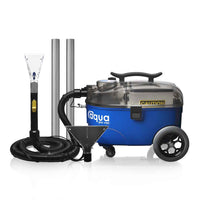
The Aqua Pro Vac Extractor is built to be lightweight and portable—31 lbs empty, on casters—which makes it easy to move in and out of storage between jobs and bring indoors rather than leaving it in a cold van or garage. That same portability means it's worth taking a few extra seconds to secure it properly during transport rather than letting it slide around loose.
Between jobs: turn the pump off and squeeze the trigger over the waste tank to clear the spray line, disconnect both hoses, empty and rinse both tanks with lukewarm water, wipe the machine down, let everything dry, then unplug it and wrap the cord around the handle. Store it in a dry indoor area.
For the off-season: run a full deep clean with lukewarm water, service both filters and dry them fully, drain the tanks and lines completely, inspect the cord, hoses, and O-rings, and store it indoors where temperatures stay well above freezing.
The full routine is in the machine's user guide, which AquaProVac publishes as a free download from the product page—the Best Practices, Draining & Cleaning, Storage, and Maintenance sections are each about half a page and cover more than most operators expect. If you own the machine and haven't read it, it's worth ten minutes.
Taking these steps before a long break helps make sure the machine is ready to perform the moment your next job comes in.
Common Carpet Extractor Storage Mistakes to Avoid
A few storage habits keep showing up as the reason extractors wear out faster than they should.
Putting Cleaning Product in the Clean Water Tank
The most common one, and the one that causes problems long after the job is over. Detergent in the supply tank leaves residue in the tank, the pump, and the spray line, and it foams in the recovery system, where foam costs you vacuum performance. The product goes on from a spray bottle; the machine sprays plain water.
Using Hot Water to Clean or Rinse
Hot water feels like the right tool for scale and film, and on a portable extractor it's the one that does lasting damage — melted hoses and housings. Keep rinse and deep-clean water lukewarm, comfortable to the touch, and no warmer.
Running the Pump to Clear the Lines
An understandable instinct when you're trying to get water out before a freeze, and the wrong one. Bleed the line through the trigger with the pump switched off instead.
Storing While Still Wet
Closing up a tank, hose, filter, or attachment before it's dry traps moisture inside. This is one of the easiest mistakes to avoid and one of the most common.
Leaving Water in Tanks or Hoses
Water left sitting doesn't just cause odor problems. Over time, it encourages corrosion in metal fittings and puts ongoing stress on seals and gaskets that weren't designed to sit submerged indefinitely.
Storing in Direct Sunlight or Extreme Heat
Prolonged UV exposure and high heat can make plastic tanks and housings brittle, fade, or crack—polypropylene and polyethylene both lose mechanical strength measurably under sustained UV. Storing equipment out of direct sunlight, especially for extended off-season periods, helps plastic components hold up much longer.
Assuming a Garage Is "Probably Fine" in a Cold Snap
Given that even a small amount of trapped water can damage a pump or crack a fitting when frozen, it's worth confirming a storage location stays above freezing rather than hoping it does.
How to Prepare Your Carpet Extractor for Its First Use After Storage
Before putting a machine back into regular rotation after off-season storage, take a few minutes to check it over rather than assuming it's ready to go. Inspect hoses, seals, and the power cord for any damage that might have developed while it sat unused, and make sure both filters are in place and dry.
Then run a test cycle with clean water and check three things against the machine is rated specs. The Aqua Pro Vac publishes its numbers — a 1100W vacuum motor, 58 psi of pump pressure, and a 0.5 gallon per minute flow rate — so you have something concrete to judge against rather than a vague sense of whether it feels right:
- Spray: an even pattern at full pressure. A weak or uneven spray usually points to a blocked nozzle, an empty tank, or a blocked filter in the clean water tank.
- Water flow: steady delivery when the trigger is held. Give the pump a few seconds to build pressure before judging it.
- Suction: strong pickup with the tool head flat against the surface. Weak suction most often means the waste tank is full or the air filter is loaded.
If anything is off — weaker suction, an unusual noise, or a leak that wasn't there before storage — address it before the machine goes back on a paying job. For issues involving the motor, pump, or electrical components, contact the manufacturer's support team rather than attempting a repair. On the Aqua Pro Vac this is a warranty matter as well as a safety one: the machine carries a limited one-year guarantee, and repairs performed by anyone other than an authorized service center are specifically excluded from it.
Conclusion
Properly storing a carpet extractor, whether it's overnight between jobs or for months during the off-season, comes down to a few consistent habits: bleed the line, empty and rinse everything with lukewarm water, let it dry completely, unplug it, and store it indoors in a dry place. Off-season storage adds a few steps—a deeper clean, both filters serviced, a full drain, and a location that stays above freezing—but the payoff is a machine ready to perform the moment you need it again.
Skipping these steps might save a few minutes today, but it often costs far more later in repairs, replacement parts, or a machine that simply isn't ready when the next job comes in. Build proper storage into your regular routine, and your extractor will reward you with a longer, more reliable working life.
Frequently Asked Questions
Can I store my carpet extractor in an unheated garage?
For a portable extractor like the Aqua Pro Vac, the manufacturer's instructions say to store it only in a dry indoor area, so an unheated garage isn't the intended storage location, even in mild weather. If it's your only option and temperatures stay reliably above freezing, it can work short-term — but drain the tanks and lines completely first, and understand that humidity swings are hard on seals and electrical parts over a long off-season.
Can I put cleaning solution in the clean water tank?
No. On the Aqua Pro Vac, the clean water tank holds plain water only — the manual states it directly: "Do not put detergent into the machine." Mix detergent with water in a spray bottle, spray the area you're cleaning, let it dwell a minute or two, agitate it, then extract. The detergent still ends up inside the machine, but through the recovery side, in the waste tank where it belongs.
What water temperature should I use for cleaning and rinsing?
Lukewarm — comfortable to the touch, never hot, with a working ceiling around 100°F (38°C). Cold, cool, and warm are all fine. Hot or boiling water can melt the water hose and housing, and that applies to rinse water and off-season deep-clean water just as much as to cleaning water.
Should I run the pump to clear water out of the lines before storage?
No. Bleed the line with the pump switched off: hold the spray nozzle over the waste tank and squeeze the trigger until the remaining water is released. Running a solution pump dry wears the diaphragms, valves, and seals that depend on the fluid for lubrication and cooling.
How long can water sit in the tank before it becomes a problem?
Even overnight is enough for dirty water to start developing an odor. For between-job storage, empty and rinse the tanks every time rather than waiting to see how long it takes to become noticeable.
Do I need to winterize my carpet extractor if I live somewhere with mild winters?
If your area never dips near freezing, freeze protection isn't the concern — but a deep clean, a full drain, and dry indoor storage are still worth doing before an extended break. Mold, mildew, and seal wear happen at any temperature if moisture is left inside the machine.
What's the difference between storing an extractor between jobs and for the off-season?
Between-job storage is about quick daily habits: bleeding the line, emptying, rinsing, drying, unplugging, and putting the machine away dry and indoors so it's ready again in a day or two. Off-season storage adds a deeper clean: servicing and drying both filters, fully draining the unit, inspecting parts, and storing it in a stable, above-freezing location for weeks or months.
How can I tell if my extractor was damaged by freezing?
Common signs include a pump that runs but produces little or no water flow, a cracked tank or fitting, or a leak that wasn't there before storage. If you suspect freeze damage, inspect the machine visually before powering it up, and have a professional look at it rather than running it hard to see whether it holds.
Is it okay to store attachments and hoses separately from the main unit?
Yes — in fact the spray hose and vacuum hose both disconnect as part of the normal end-of-job routine, so storing them separately is the intended end state. Just make sure everything is clean and completely dry first, and keep the hoses loosely coiled rather than tightly bent to prevent kinks and cracks. This matters more with a longer hose: the Aqua Pro Vac's standard hose is 10 feet, and the upgraded long hose runs 22½ feet, which needs a wider coil and a bit more hanging space to store without hard bends.
Sources
- Aqua Pro Vac, User Guide: Professional Carpet & Upholstery Cleaner — Best Practices (p. 8), Draining & Cleaning (p. 12), Storage (p. 13), Maintenance & Servicing (pp. 14–15). Available from the product page at aquaprovac.com.
- Aqua Pro Vac, "How It Works" and product specifications (aquaprovac.com)
- U.S. Geological Survey, "Water Density," Water Science School (usgs.gov)
- U.S. Environmental Protection Agency, "Mold Course Chapter 9" and "A Brief Guide to Mold, Moisture and Your Home" (epa.gov)
- Essentra Components, "UV and its effect on plastics: an overview" (essentracomponents.com)