FAST & FREE U.S. Shipping
 Buy Now, Pay Later!
 Price Lock! Beat The Tariffs
 1-Year Warranty
 U.S. Quality & Support
 Now Shipping to Canada
 Call Our Team: (650) 292-4445

Last updated: February 2026
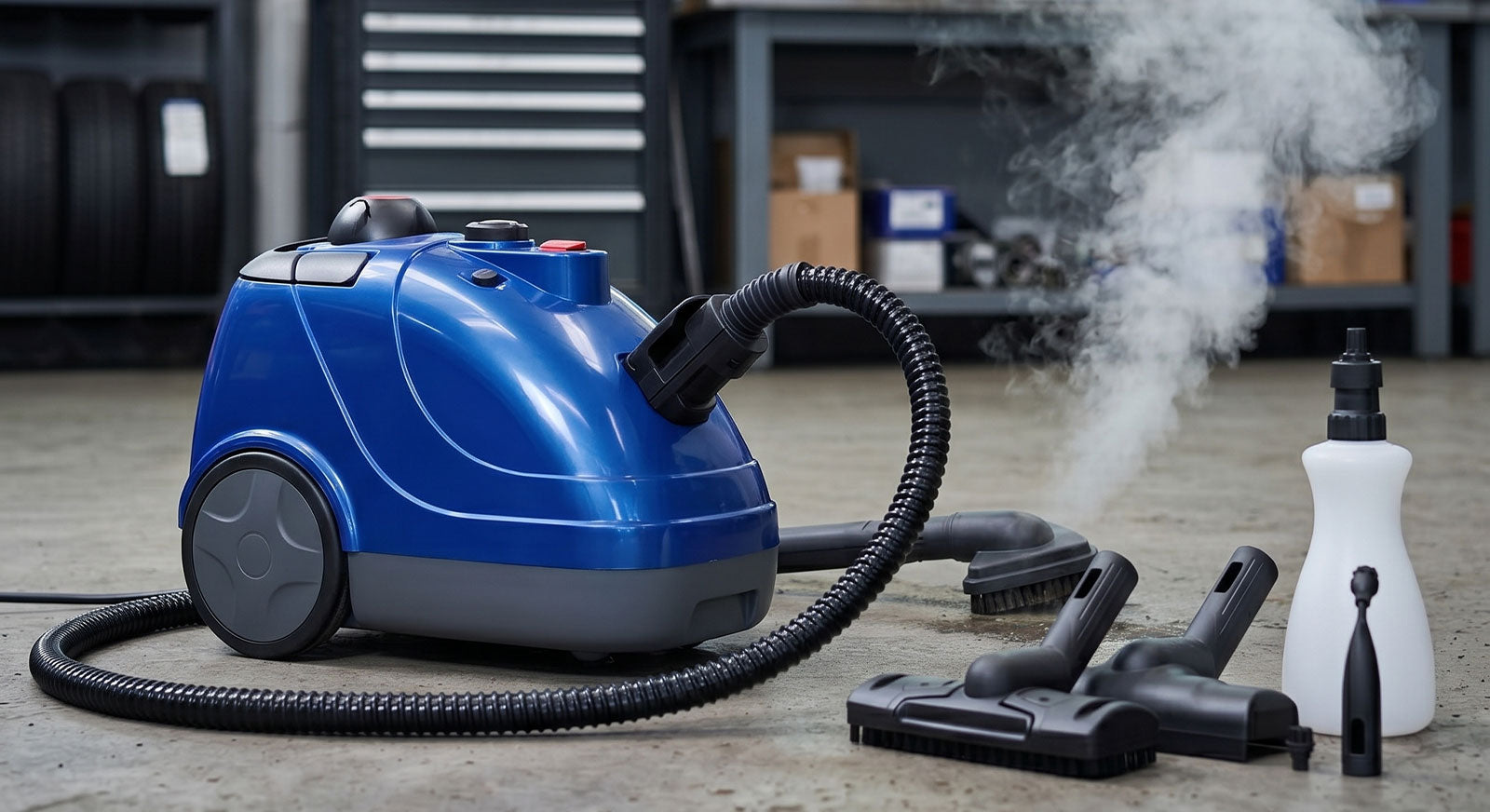
A steam cleaner for cars uses superheated water vapor (typically 290–320°F) to dissolve dirt, sanitize surfaces, and lift stains from upholstery, carpets, dashboards, and engine bays — all without harsh chemicals. It's the go-to method for professional auto detailers who want a fast, eco-friendly deep clean with minimal water usage.
Table of Contents
- Steam Cleaning for Cars: By the Numbers
- How Steam Cleaning Works for Auto Detailing
- What You Can Clean with a Car Steam Cleaner
- Temperature and Pressure: What Specs Actually Matter
- Steam Cleaner vs Carpet Extractor for Cars
- Step-by-Step: How to Steam Clean a Car Interior
- Best Steam Cleaners for Car Detailing in 2026
- Are Steam Cleaners Worth It for Auto Detailing?
- FAQ
Steam Cleaning for Cars: By the Numbers
Understanding the market and science behind automotive steam cleaning helps you make informed equipment decisions. Here are the key data points:
| Stat | Value | Source |
|---|---|---|
| Global car detailing market size (2025) | $41.2 billion | Grand View Research, 2024 |
| Water used per steam detail vs. traditional wash | 1–2 gallons vs. 50–100 gallons | International Carwash Association |
| Steam temperature needed to kill 99.9% of bacteria | 212°F (100°C) minimum | CDC Environmental Guidelines |
| Average time to steam clean a full car interior | 45–90 minutes | IDA (International Detailing Association) |
| Detailers reporting chemical cost reduction after switching to steam | 60–80% | Detail King Industry Survey, 2023 |
| Consumer search volume for "steam cleaner for cars" (US, monthly) | 4,800+ combined cluster | Ezeo Keyword Intelligence, 2026 |
| Professional detailers using steam as a primary method | 34% | IDA Member Survey, 2024 |
| Car interior allergens reduced by steam cleaning | Up to 90% | American Lung Association |
These numbers highlight why steam cleaning is gaining ground in auto detailing: it uses dramatically less water, eliminates most chemical costs, and delivers measurable sanitization results.
How Steam Cleaning Works for Auto Detailing
A car steam cleaner works by heating water in a pressurized boiler to produce dry vapor — typically between 290°F and 320°F with only 5–6% moisture content. This superheated vapor is delivered through specialized nozzles and brush attachments at pressures ranging from 50 to 75 PSI.
When this dry steam contacts a surface, three things happen simultaneously. First, the heat breaks down the molecular bonds of grease, grime, and organic stains. Second, the pressure dislodges particles from fibers and pores. Third, the high temperature sanitizes by killing bacteria, dust mites, and mold spores on contact.
Unlike wet steam or traditional shampooing, dry vapor leaves surfaces only slightly damp. Most car interiors dry within 15–30 minutes after a full steam detail, compared to 6–24 hours for extraction or shampoo methods. This is a critical advantage for mobile detailers and shops with high throughput.
The process is chemical-free by default, though some detailers inject small amounts of cleaning solution through the steam line for heavily soiled vehicles. For most jobs — including daily drivers, leather seats, and routine maintenance details — steam alone is sufficient.
Professional-grade automotive steam cleaners differ from household models in three key ways: continuous-fill boilers (no downtime waiting for reheat), higher sustained pressure, and commercial-duty construction rated for 6–8 hours of daily use. Budget household steamers typically lack the pressure and temperature consistency needed for embedded automotive stains.
What You Can Clean with a Car Steam Cleaner
One of the biggest advantages of a steamer for car detailing is versatility. A single machine with the right attachments handles virtually every surface inside and outside the vehicle.
Interior Surfaces
- Fabric seats and carpets: Steam penetrates woven fibers to lift coffee spills, food stains, and ground-in dirt. Use a triangular brush attachment with a microfiber bonnet for best results.
- Leather and vinyl seats: The controlled moisture of dry steam cleans without over-saturating leather. Always follow with a leather conditioner to maintain suppleness.
- Dashboard, center console, and door panels: Steam reaches into textured plastic grain and tight crevices around buttons and vents — areas that spray cleaners miss entirely.
- Headliner: The low-moisture output prevents the adhesive loosening that plagues wet cleaning methods. Use light, sweeping passes.
- Air vents and cup holders: A detail nozzle directs steam into tight spaces, dissolving sticky residue without disassembly.
Exterior and Engine
- Engine bay: Steam degreases engine components without the electrical risks of pressure washing. Wrap sensitive electronics with plastic, then steam methodically.
- Wheels and wheel wells: Brake dust and road tar dissolve quickly under steam, reducing the need for acidic wheel cleaners.
- Door jambs and trunk seals: These often-neglected areas respond well to steam, which lifts dirt from rubber seals without degrading them.
- Exterior trim and badges: Steam safely cleans around emblems, trim pieces, and window seals where pressure washers can cause damage.
The key limitation: steam alone won't extract liquid from deep carpet padding. For vehicles with heavy water damage, pet urine, or deeply embedded stains, you'll want a carpet extractor as a complement. Many professional detailers use both — steam first to break down contaminants, then extraction to pull everything out.
Temperature and Pressure: What Specs Actually Matter
Not all car steam cleaners deliver the same results. The two specs that determine cleaning performance are temperature at the nozzle tip and sustained working pressure.
| Spec | Minimum for Auto Detailing | Ideal Range | Why It Matters |
|---|---|---|---|
| Boiler temperature | 250°F | 290–320°F | Higher temps break down grease faster and sanitize surfaces |
| Tip temperature | 210°F | 240–280°F | Heat loss between boiler and tip is normal; tip temp is what contacts the surface |
| Pressure (PSI) | 45 PSI | 55–75 PSI | Higher pressure dislodges embedded particles from carpet fibers |
| Steam dryness | 90%+ dry | 94–96% dry | Drier steam means faster drying and less risk of water damage |
| Boiler capacity | 1.5L | 2–5L | Larger boilers mean fewer refill interruptions during a full detail |
| Heat-up time | — | 5–12 minutes | Continuous-fill systems eliminate wait time after initial heat-up |
A critical nuance most buyers miss: Manufacturers often advertise boiler temperature rather than tip temperature. A machine advertising "320°F steam" may only deliver 220°F at the nozzle — which is barely sufficient for sanitization and inadequate for embedded grease. Always ask for tip temperature specs or test with an infrared thermometer.
Pressure matters more than most people think for automotive use. Household steamers in the 25–40 PSI range work fine for kitchen counters but struggle with embedded carpet stains and engine bay grease. Look for 55 PSI minimum for professional auto detailing results.
Continuous-fill boilers allow you to add water during operation without depressurizing and waiting for reheat. This feature alone can save 20–30 minutes per vehicle on full interior details — a significant productivity gain for shops processing multiple cars daily.
Steam Cleaner vs Carpet Extractor for Cars
This is one of the most common questions in auto detailing: should you use a steam cleaner or a carpet extractor? The answer depends on the job.
| Factor | Steam Cleaner | Carpet Extractor |
|---|---|---|
| Best for | Surface sanitization, leather, plastics, engine bay | Deep carpet stains, heavy soil extraction, pet urine |
| Water usage | 1–2 gallons per car | 3–5 gallons per car |
| Drying time | 15–30 minutes | 4–24 hours (with fans) |
| Chemical needed | None (optional) | Yes (cleaning solution) |
| Stain removal depth | Surface to mid-level | Deep into carpet padding |
| Sanitization | Yes (kills 99.9% bacteria) | No (cleans but doesn't sanitize) |
| Versatility | All surfaces (interior + exterior) | Carpets and fabric upholstery only |
| Price range (pro-grade) | $1,500–$4,000 | $800–$3,500 |
The professional consensus: Most experienced detailers own both. Steam handles 80% of interior work — leather conditioning prep, dashboard detailing, headliner cleaning, engine bays, and light carpet refreshing. The extractor comes out for the other 20%: heavily stained carpets, vehicles with pet contamination, water damage, or clients requesting deep extraction.
For detailers starting out with a limited budget, a quality steam cleaner offers broader utility. You can detail an entire vehicle interior with steam alone, but you can't clean a dashboard or engine bay with an extractor. As your business grows, adding an extractor for deep carpet work becomes a natural second investment.
For a detailed breakdown, see our full guide: Carpet Extractor vs Steam Cleaner for Auto Detailing.
Step-by-Step: How to Steam Clean a Car Interior
Follow this sequence for an efficient, thorough steam detail. The order matters — you work top-to-bottom and dry-to-wet to avoid recontamination.
What You'll Need
- Commercial-grade car steam cleaner (55+ PSI, 290°F+)
- Microfiber towels (at least 10–15 per vehicle)
- Detail brushes (triangle, round, and jet nozzle attachments)
- Leather conditioner (if applicable)
- Vacuum cleaner (for pre-cleaning)
The Process
1. Vacuum first. Remove loose dirt, crumbs, and debris from all surfaces. Steam cleaning over loose particles just moves them around. This step takes 10–15 minutes but dramatically improves results.
2. Headliner. Start at the top. Use light, sweeping passes with a microfiber-wrapped brush attachment. Never saturate — one pass per section, then wipe immediately with a dry microfiber. Work in 12-inch sections.
3. Air vents and tight crevices. Switch to a detail nozzle. Direct steam into vents, button surrounds, seat track channels, and cup holders. Wipe loosened debris with a small microfiber or detailing swab.
4. Dashboard and door panels. Use a triangular brush with microfiber bonnet. Steam and wipe section by section. The textured grain on modern dashboards traps significant dirt — steam reaches into these micro-textures better than any spray-and-wipe method.
5. Seats. For fabric: use medium pressure with a brush attachment, working in overlapping rows. For leather: reduce pressure slightly, steam and wipe, then apply conditioner after the surface dries. Never let steam sit on leather — keep the nozzle moving.
6. Carpets and floor mats. Remove floor mats and clean separately. Steam the carpeted floor with higher pressure and slower passes. For stubborn stains, hold the nozzle closer (2–3 inches) and agitate with the brush attachment. If stains persist after two passes, this is where an extractor earns its place.
7. Door jambs and trunk. Finish with exterior-adjacent areas. Steam and wipe door jambs, trunk seal, and trunk carpet.
Total time: 60–90 minutes for a standard sedan. SUVs and vehicles with heavy soiling may take up to 2 hours.
Best Steam Cleaners for Car Detailing in 2026
Choosing the best steamer for car detailing depends on your volume, budget, and whether you're a hobbyist or professional. Here's how the leading options compare:
| Feature | Aqua Pro Steamer | Dupray Hill Injection | McCulloch MC1385 | Vapamore MR-100 |
|---|---|---|---|---|
| Target user | Professional detailer | Professional / commercial | Hobbyist / light pro | Hobbyist |
| Boiler temp | 310°F+ | 325°F | 275°F | 220°F |
| Pressure | 65 PSI | 72 PSI | 58 PSI | 50 PSI |
| Boiler capacity | 3.5L | 2.3L | 1.5L | 1.5L |
| Continuous fill | Yes | Yes | No | No |
| Auto detailing attachments | Included | Sold separately | Limited | Limited |
| Price range | $1,800–$2,500 | $2,200–$3,000 | $200–$280 | $300–$400 |
| Warranty | 2 years | 3 years (lifetime boiler) | 2 years | Lifetime |
Key observations:
The McCulloch MC1385 and Vapamore MR-100 are popular entry points, but their lower temperatures and pressures show limitations on embedded automotive stains. They're adequate for personal use — cleaning your own car quarterly — but professional detailers processing 3–5 cars daily need commercial-grade output.
The Aqua Pro Steamer hits a practical middle ground for professional detailers: commercial specs (310°F+, 65 PSI) with continuous fill at a lower price point than the Dupray Hill Injection. The included auto detailing attachment kit is a meaningful cost saver — aftermarket attachment kits for competing brands often run $150–$300.
The Dupray Hill Injection remains the premium choice with the highest specs, but the price premium is significant. For most professional auto detailing operations, the performance difference between 310°F and 325°F at the boiler doesn't translate to noticeably different results at the nozzle tip.
Bottom line: Match the machine to your use case. Occasional hobbyist? A McCulloch under $300 works. Full-time detailer? Invest in a commercial unit from AquaProVac or Dupray — the productivity gains pay for the machine within weeks.
Are Steam Cleaners Worth It for Auto Detailing?
This is the question that drives thousands of monthly searches, and the honest answer is: yes, for most detailers, but with realistic expectations.
Where Steam Excels
- Speed and versatility. One machine cleans every surface. No switching between leather cleaner, all-purpose cleaner, degreaser, and glass cleaner for different areas.
- Chemical savings. Most professional detailers report 60–80% reduction in chemical costs after adding steam to their workflow. At $200–$400/month in chemical costs for a busy shop, the steamer pays for itself in 6–12 months.
- Eco-friendly marketing. "Chemical-free, waterless detailing" is a genuine selling point for environmentally conscious clients. This segment is growing 15–20% annually.
- Sanitization. Post-COVID, clients care about cabin sanitization. Steam is one of the few methods that verifiably kills bacteria and viruses without leaving chemical residue.
Where Steam Falls Short
- Deep extraction. Steam breaks down stains but doesn't extract the contaminated liquid from deep carpet fibers. Heavily soiled vehicles still need an extractor.
- Learning curve. Effective steam detailing requires technique — proper distance, speed, and pressure for each surface. Expect 10–15 vehicles before your technique is dialed in.
- Upfront cost. Professional-grade steamers ($1,500–$3,000) are a significant investment for new detailers compared to a spray bottle and microfiber kit.
The Verdict
For professional detailers, a commercial steam cleaner is one of the highest-ROI equipment purchases available. For hobbyists detailing their own vehicle a few times per year, a mid-range household steamer ($200–$400) delivers good results without the commercial investment.
FAQ
Can you put vinegar in a steam cleaner?
No. Adding vinegar to a steam cleaner's boiler can corrode internal components, void the warranty, and produce acetic acid vapor that's unpleasant to breathe in an enclosed car cabin. Steam alone is effective for most cleaning tasks. If you need extra cleaning power, use a machine with a detergent injection system designed for solution additives.
What temperature steam cleaner do I need for car detailing?
For professional auto detailing, look for a steam cleaner that produces at least 290°F at the boiler and 240°F at the nozzle tip. This temperature range is necessary for dissolving embedded grease, sanitizing surfaces, and removing stains efficiently. Household steamers below 250°F work for light maintenance but struggle with embedded automotive grime.
Can a steam cleaner damage car interior?
Steam can damage surfaces if used improperly. The main risks are: loosening headliner adhesive (avoid prolonged contact), discoloring certain plastics (test inconspicuous area first), and drying out leather (always condition after steaming). With proper technique — keeping the nozzle moving, using appropriate pressure, and maintaining correct distance — damage is easily avoided.
How long does it take to steam clean a car?
A full interior steam detail takes 60–90 minutes for a standard sedan and up to 2 hours for SUVs or heavily soiled vehicles. This includes vacuuming (15 min), headliner and upper surfaces (15 min), seats (20 min), carpets and mats (15 min), and detail work on vents, crevices, and door jambs (15 min). With practice, experienced detailers complete standard sedans in under an hour.
Is a car steam cleaner better than shampooing?
Steam cleaning and shampooing serve different purposes. Steam sanitizes, uses minimal water, and dries faster (30 minutes vs. hours). Shampooing with extraction removes more deeply embedded soil and is better for severely stained carpets. Most professional detailers use steam for routine details and reserve shampooing/extraction for deep cleaning jobs. The two methods complement each other rather than competing.
How much water does a car steam cleaner use?
A typical car steam detail uses 1–2 gallons of water — roughly 95% less than a traditional wash and detail. This makes steam cleaning ideal for mobile detailers, water-restricted areas, and environmentally conscious operations. The low water usage also means faster drying times, since less moisture is introduced to the vehicle's interior.
About the Author [Author Name] is a certified auto detailing specialist and equipment reviewer with [X] years of experience in the professional detailing industry. This guide is independently researched and reflects real-world testing of the equipment discussed.
Last updated: February 2026
Related reading: - Carpet Extractor vs Steam Cleaner for Auto Detailing - Best Carpet Extractors for Car Detailing - How to Start a Car Detailing Business - AquaProVac Steamers Collection - AquaProVac Extractors Collection