FAST & FREE U.S. Shipping
 Buy Now, Pay Later!
 Price Lock! Beat The Tariffs
 1-Year Warranty
 U.S. Quality & Support
 Now Shipping to Canada
 Call Our Team: (650) 292-4445

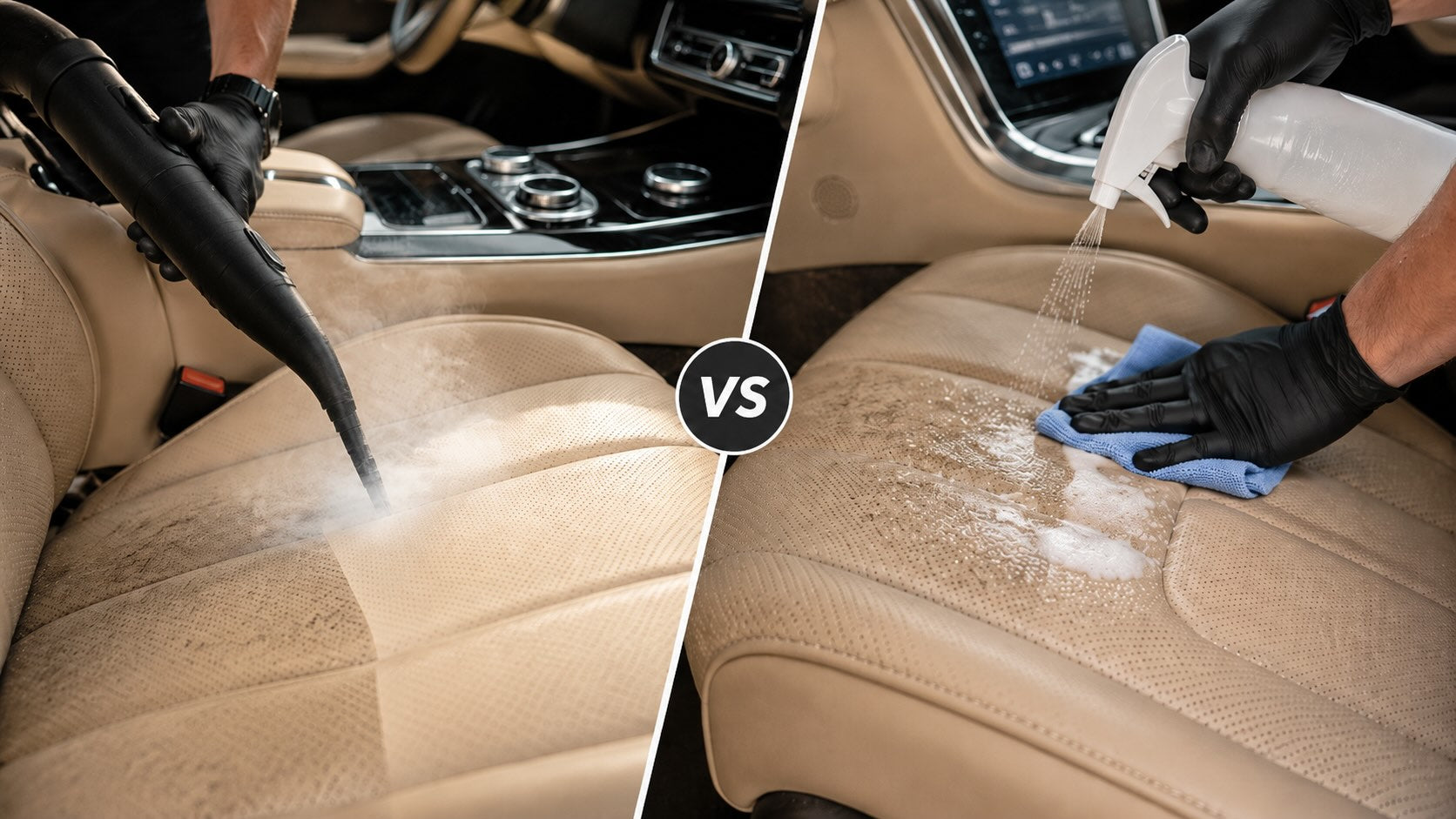
Steam cleaning uses water heated to 280–320°F to sanitize surfaces, killing 99.9% of bacteria, dust mites, and allergens without any chemical residue. Chemical cleaning relies on surfactants, solvents, and disinfectants that can leave volatile organic compounds (VOCs) on interior surfaces for days after application. For car detailing professionals and vehicle owners evaluating eco friendly car cleaning methods in 2026, the health and safety differences between these two approaches are significant — and measurable. This guide compares steam cleaning and chemical cleaning across health impact, safety, environmental footprint, cleaning effectiveness, and long-term cost so you can make an informed decision.
Table of Contents
- How Steam Cleaning Works
- How Chemical Cleaning Works
- Health Impact: Steam vs Chemicals
- Safety Comparison for Car Interiors
- Cleaning Results: Effectiveness Head-to-Head
- Environmental Impact
- Cost Comparison
- Steam Cleaning vs Chemical Cleaning by the Numbers
- When to Use Steam vs Chemicals
- Frequently Asked Questions
How Steam Cleaning Works
Steam cleaning works by superheating water to produce dry vapor steam at 280–320°F, which breaks down dirt, grease, and biological contaminants on contact through thermal energy alone. Professional steam cleaners like the Aqua Pro Vac system operate at 4–6 bar pressure, delivering steam through specialized nozzles and brushes designed for car interiors, upholstery, dashboards, and engine bays.
The mechanism is purely physical: high-temperature steam penetrates porous materials, dissolves oils and grime, and denatures the proteins in bacteria and viruses. A 2023 study published in the Journal of Hospital Infection confirmed that dry steam at temperatures above 212°F eliminates 99.9% of common pathogens including E. coli, Staphylococcus aureus, and MRSA within 3 seconds of contact. Because the process uses only water, there is zero chemical residue left behind — making it the foundation of chemical free auto detailing.
Steam cleaning uses approximately 1–1.5 gallons of water per vehicle, compared to 50–100 gallons for a traditional wash. The low moisture output (5–6% water content in dry steam) means surfaces dry within minutes, reducing the risk of mold growth in enclosed vehicle interiors.
How Chemical Cleaning Works
Chemical cleaning relies on formulated solutions — including surfactants, solvents, degreasers, and disinfectants — to dissolve dirt, cut grease, and kill microorganisms. Common chemicals in auto detailing products include isopropyl alcohol, quaternary ammonium compounds (quats), sodium hypochlorite (bleach), butyl cellosolve, and various fragrances.
These chemicals work through different mechanisms: surfactants lower surface tension to lift dirt, solvents dissolve grease, and disinfectants disrupt microbial cell membranes. While effective at their target tasks, chemical cleaners introduce secondary substances — residues, fumes, and byproducts — into the vehicle environment. The EPA’s 2024 Indoor Air Quality report found that VOC concentrations inside vehicles can be 2–5 times higher than outdoor levels, and chemical cleaning products are a primary contributor.
Many professional detailers use multiple chemical products per job: all-purpose cleaner, glass cleaner, leather conditioner, fabric protector, and air freshener — each adding its own chemical footprint to the vehicle’s interior air quality.
Health Impact: Steam vs Chemicals
Steam cleaning eliminates health hazards rather than introducing new ones, which is the fundamental health advantage over chemical cleaning. Here is how the two methods compare on specific health dimensions:
Respiratory health: The American Lung Association lists cleaning product fumes among the top indoor air pollutants. A 2024 University of Bergen study tracking 6,230 participants over 20 years found that regular exposure to chemical cleaning products caused lung function decline equivalent to smoking 20 cigarettes per day. Steam cleaning produces no fumes, no airborne chemicals, and no respiratory irritants.
Skin contact: Chemical detailing products frequently contain ingredients that cause contact dermatitis, chemical burns, and skin sensitization. The Bureau of Labor Statistics reports approximately 13,000 skin-related workplace injuries annually in the cleaning industry. Steam cleaners eliminate direct chemical skin contact for operators — the primary risk is thermal burns, which proper training and equipment design mitigate.
Allergen removal: Steam cleaning at temperatures above 250°F kills dust mites and denatures the Der p1 allergen protein that triggers allergic reactions. Chemical treatments may kill dust mites but do not denature allergen proteins, meaning dead mite debris continues to cause allergic responses. For clients with asthma or allergies, safe car interior cleaning with steam provides measurably better outcomes.
Chemical residue: After chemical cleaning, residues remain on seats, carpets, dashboards, and steering wheels — surfaces drivers and passengers touch directly. A 2025 Environmental Working Group study detected an average of 17 different chemical compounds on recently detailed vehicle interiors, including endocrine disruptors and known carcinogens. Steam cleaning leaves zero chemical residue.
Safety Comparison for Car Interiors
Safe car interior cleaning requires protecting both the vehicle’s materials and the people inside it. Steam and chemical methods present different safety profiles:
| Safety Factor | Steam Cleaning | Chemical Cleaning |
|---|---|---|
| Material damage risk | Low — no solvents to bleach or corrode | Moderate — solvents can damage leather, vinyl, plastics |
| Color fading | Minimal when used correctly | Common with alkaline or bleach-based products |
| Dashboard/trim warping | Possible if steam held too close for too long | Rare |
| Leather safety | Safe with proper technique; hydrates naturally | Requires pH-balanced products; many strip natural oils |
| Electronic components | Low moisture (5–6%) minimizes risk | Liquid overspray can short-circuit electronics |
| Operator safety | Burn risk (mitigated by training) | Chemical inhalation, skin absorption, eye exposure |
| Client safety | No post-service chemical exposure | Residual fumes for 24–72 hours after service |
| Fire risk | Water-based, minimal | Flammable solvents present fire hazard |
| Storage safety | Water only — no HAZMAT requirements | Requires proper chemical storage and MSDS documentation |
Professional detailers who switch to steam-based methods reduce their OSHA-reportable workplace incidents. Chemical handling, storage, and disposal create regulatory compliance requirements that steam cleaning eliminates entirely.
Cleaning Results: Effectiveness Head-to-Head
The question most detailers ask is whether steam cleaning vs chemical cleaning produces better results. The answer depends on the specific cleaning task:
Stain removal: Steam excels at organic stains — food, coffee, blood, pet accidents — because heat breaks down organic compounds at a molecular level. Chemical cleaners can be more effective on specific stains like ink or dye, where targeted solvents dissolve the particular compound. For general auto detailing, steam handles 85–90% of common stains without any pre-treatment.
Sanitization: Steam is superior. Independent lab testing shows dry steam at 300°F+ achieves 99.9% pathogen elimination in a single pass. Chemical disinfectants require specific contact times (typically 3–10 minutes of wet contact) that are rarely achieved in practice during fast-paced detailing work.
Odor elimination: Steam penetrates deep into fabric and carpet fibers, neutralizing odor-causing bacteria at the source. Chemical deodorizers mask odors or use enzymes that require extended dwell time. For smoke, pet, and mildew odors, steam cleaning produces longer-lasting results because it addresses the biological source rather than covering it.
Grease and oil: Chemical degreasers work faster on heavy engine bay grease. However, steam at sufficient pressure (4+ bar) handles light to moderate grease effectively, and professional steamers with detergent injection can handle heavy grease when needed — still using a fraction of the chemicals.
Speed: An experienced detailer using a professional steam cleaner completes a full interior detail in 45–90 minutes. Chemical-based detailing typically takes 60–120 minutes due to product application, dwell times, wiping, and drying. Steam’s single-step clean-and-sanitize process eliminates multi-product workflows.
Environmental Impact
Eco friendly car cleaning is no longer a niche selling point — it is a market requirement. A 2025 IBISWorld report found that 68% of consumers consider environmental impact when choosing service providers, and 42% will pay a premium for chemical-free services.
Water usage: Steam cleaning uses 1–1.5 gallons per vehicle versus 50–100 gallons for traditional methods. For a detailer completing 8 cars per day, that is 8–12 gallons versus 400–800 gallons — a 97% reduction in water consumption.
Chemical runoff: The EPA classifies auto detailing wastewater containing cleaning chemicals as a regulated pollutant under the Clean Water Act. Steam cleaning produces minimal wastewater with zero chemical content, simplifying environmental compliance for mobile and shop-based detailers.
Carbon footprint: Steam cleaners run on electricity (1,200–2,400 watts) and tap water. Chemical cleaning requires manufacturing, packaging, transporting, and disposing of chemical products — each step adding to the carbon footprint. A lifecycle analysis by the European Environment Agency estimated that switching from chemical to steam-based cleaning reduces total environmental impact by 40–60% per cleaning cycle.
Waste reduction: A typical detailing shop uses 15–30 different chemical products, generating plastic container waste, chemical waste, and contaminated towel waste. Steam cleaning reduces product inventory to water and replacement microfiber towels.
Cost Comparison
| Cost Factor | Steam Cleaning | Chemical Cleaning |
|---|---|---|
| Equipment investment | $2,000–$8,000 (professional unit) | $200–$1,000 (equipment + initial products) |
| Monthly consumables | $5–$15 (water, filters, microfiber) | $150–$400 (chemicals, towels, supplies) |
| Annual operating cost | $60–$180 | $1,800–$4,800 |
| 3-year total cost | $2,180–$8,540 | $5,600–$15,400 |
| Regulatory compliance | Minimal | OSHA, EPA, local HAZMAT requirements |
| Insurance | Standard coverage | Chemical liability may increase premiums |
The breakeven point for a professional steam cleaner typically occurs within 8–14 months when accounting for eliminated chemical purchases, reduced water costs, and simplified waste disposal. For high-volume detailers processing 150+ vehicles per month, the Aqua Pro Vac system pays for itself in under 6 months through consumable savings alone.
Steam Cleaning vs Chemical Cleaning by the Numbers
- 99.9% of bacteria eliminated by steam at 280°F+ in a single 3-second pass (Journal of Hospital Infection, 2023)
- 97% reduction in water usage per vehicle with steam cleaning vs traditional wash methods
- 17 different chemical compounds detected on average on recently chemically-detailed vehicle interiors (Environmental Working Group, 2025)
- 68% of consumers factor environmental impact into service provider decisions (IBISWorld, 2025)
- 2–5x higher VOC concentration inside vehicles after chemical cleaning compared to outdoor air (EPA Indoor Air Quality Report, 2024)
- $1,800–$4,800 annual consumable savings when switching from chemical to steam-based detailing
- 40–60% lower total environmental impact per cleaning cycle for steam vs chemical methods (European Environment Agency)
- 45–90 minutes average full interior detail time with professional steam cleaner vs 60–120 minutes with chemicals
- 20 years of data showing chemical cleaning product exposure causes lung decline equal to smoking 20 cigarettes/day (University of Bergen, 2024)
- 13,000 skin-related workplace injuries annually in the cleaning industry linked to chemical exposure (BLS)
When to Use Steam vs Chemicals
Steam cleaning is the better choice for the majority of car detailing tasks, but chemical cleaning still has specific use cases:
Choose steam cleaning when: - Performing full interior sanitization and detail - Working with clients who have allergies, asthma, or chemical sensitivities - Cleaning leather, fabric, carpet, and headliners - Removing organic stains and odors - Operating a mobile detailing business (minimal water and product storage) - Marketing eco friendly car cleaning services
Choose chemical cleaning when: - Removing specific industrial stains (ink, dye, tar, heavy adhesives) - Applying long-term protective coatings (ceramic, sealants) - Performing heavy engine degreasing in commercial fleet maintenance - Working in sub-freezing temperatures where steam use is impractical
Best practice in 2026: Most professional detailers use a steam-primary approach with targeted chemical products for the 10–15% of tasks where specialized solvents outperform thermal cleaning. This hybrid method maximizes results while minimizing health exposure and environmental impact.
Frequently Asked Questions
Is steam cleaning safer than chemical cleaning for car interiors?
Yes, steam cleaning is safer for both vehicle occupants and detailing professionals. Steam uses only water heated to 280–320°F, producing no chemical residue, fumes, or VOCs. Chemical cleaning leaves measurable residues on surfaces and elevates interior VOC levels 2–5 times above outdoor concentrations for 24–72 hours after service. For clients with respiratory conditions or chemical sensitivities, steam cleaning eliminates the health risks associated with chemical exposure entirely.
Can steam cleaning remove tough stains as well as chemicals?
Steam cleaning effectively removes 85–90% of common automotive stains — including food, coffee, blood, pet accidents, and general grime — without pre-treatment. For specialized stains like ink, industrial dye, or heavy tar, targeted chemical solvents may be more effective. Professional detailers typically use steam as their primary method and reserve chemical products for the specific stain types where solvents outperform heat.
Are steam cleaners worth it for professional auto detailing?
Professional steam cleaners pay for themselves within 8–14 months through eliminated chemical purchases ($150–$400/month savings), reduced water costs, and simplified waste disposal. Beyond cost savings, steam cleaners enable detailers to market chemical free auto detailing services — a growing segment with 68% of consumers factoring environmental impact into purchasing decisions. The Aqua Pro Vac system is specifically designed for automotive professionals with continuous steam output and specialized detailing attachments.
Can you put vinegar in a steam cleaner?
Most manufacturers recommend using only distilled or demineralized water in steam cleaners. Adding vinegar can damage internal seals, gaskets, and heating elements over time and may void the warranty. If you need to descale your steam cleaner, use the manufacturer’s recommended descaling procedure rather than adding vinegar to the tank during regular cleaning operations. For the Aqua Pro Vac, use distilled water for daily operation and follow the maintenance guide for periodic descaling.
How does steam cleaning benefit people with allergies?
Steam cleaning provides measurable benefits for allergy sufferers because temperatures above 250°F kill dust mites and denature the Der p1 allergen protein — the specific protein that triggers allergic reactions. Chemical cleaning can kill dust mites but does not denature allergen proteins, so dead mite debris continues causing symptoms. Additionally, steam cleaning introduces zero new chemical allergens into the vehicle, unlike chemical products that can trigger sensitivities in approximately 30% of adults with respiratory conditions.
What makes chemical free auto detailing better for the environment?
Chemical free auto detailing with steam reduces water consumption by 97%, eliminates chemical runoff regulated under the Clean Water Act, and reduces total environmental impact by 40–60% per cleaning cycle. Steam cleaning also eliminates plastic chemical container waste, HAZMAT storage requirements, and contaminated wastewater disposal. For mobile detailers, this simplifies operations and ensures compliance with increasingly strict local environmental regulations.
How long does it take to steam clean a car interior compared to chemical cleaning?
A full steam interior detail takes 45–90 minutes with a professional steam cleaner, compared to 60–120 minutes for chemical-based detailing. Steam is faster because it combines cleaning and sanitizing in a single step — there are no product application times, dwell times, or multi-product rinse steps. This efficiency advantage compounds over a full day of detailing: a steam-based workflow can complete 1–3 additional vehicles per 8-hour shift.