FAST & FREE U.S. Shipping
 Buy Now, Pay Later!
 Price Lock! Beat The Tariffs
 1-Year Warranty
 U.S. Quality & Support
 Now Shipping to Canada
 Call Our Team: (650) 292-4445

Last updated: February 2026
Steam Cleaner for Car Detailing: The Complete Guide (2026)
A steam cleaner for cars uses superheated water vapor (typically 290–320°F) to dissolve dirt, sanitize surfaces, and lift stains from upholstery, carpets, dashboards, and engine bays, without harsh chemicals. For professional detailers, it is one of the fastest ways to deliver a deep clean with minimal water use.
Quick answer
If you are detailing cars professionally, look for a steam cleaner that sustains 55–75 PSI, reaches 290–320°F at the boiler, and delivers 240–280°F at the nozzle tip. Steam is ideal for sanitizing and surface cleaning, while a carpet extractor is better for deep liquid removal in carpet padding.
Steam Cleaning for Cars: By the Numbers
Understanding the market and the basics behind automotive steam cleaning helps you make better equipment decisions. Here are the key data points often referenced by detailers:
| Stat | Value | Source |
|---|---|---|
| Global car detailing market size (2025) | $41.2 billion | Grand View Research (2024) |
| Water used per steam detail vs traditional wash | 1–2 gallons vs 50–100 gallons | International Carwash Association |
| Steam temperature needed to kill 99.9% of bacteria | 212°F (100°C) minimum | CDC Environmental Guidelines |
| Average time to steam clean a full car interior | 45–90 minutes | IDA (International Detailing Association) |
| Detailers reporting chemical cost reduction after switching to steam | 60–80% | Detail King Industry Survey (2023) |
| Consumer search volume for "steam cleaner for cars" (US, monthly) | 4,800+ combined cluster | Ezeo Keyword Intelligence (2026) |
| Professional detailers using steam as a primary method | 34% | IDA Member Survey (2024) |
| Car interior allergens reduced by steam cleaning | Up to 90% | American Lung Association |
The takeaway: steam cleaning is gaining ground because it reduces water use, cuts chemical spend, and helps deliver a measurable sanitization story for clients.
How Steam Cleaning Works for Auto Detailing
A car steam cleaner heats water in a pressurized boiler to produce dry vapor, typically between 290°F and 320°F, with low moisture content. The vapor exits through nozzles and brush attachments at pressures often ranging from 50 to 75 PSI.
When dry steam hits a surface, three things happen: heat breaks down grime and oils, pressure helps dislodge debris from pores and fibers, and high temperature supports sanitization. Because dry vapor leaves surfaces only lightly damp, interiors can often dry in 15–30 minutes, versus hours for wet shampoo methods.
Pro tip
Manufacturers often advertise boiler temperature, not nozzle tip temperature. Tip temperature is what actually touches the surface, so it is the spec that matters most for real world performance.
What You Can Clean with a Car Steam Cleaner
Interior surfaces
- Fabric seats and carpets: Lifts spills and ground in dirt. A triangular brush with a microfiber bonnet works well.
- Leather and vinyl: Dry steam cleans with controlled moisture. Follow with conditioner after the surface dries.
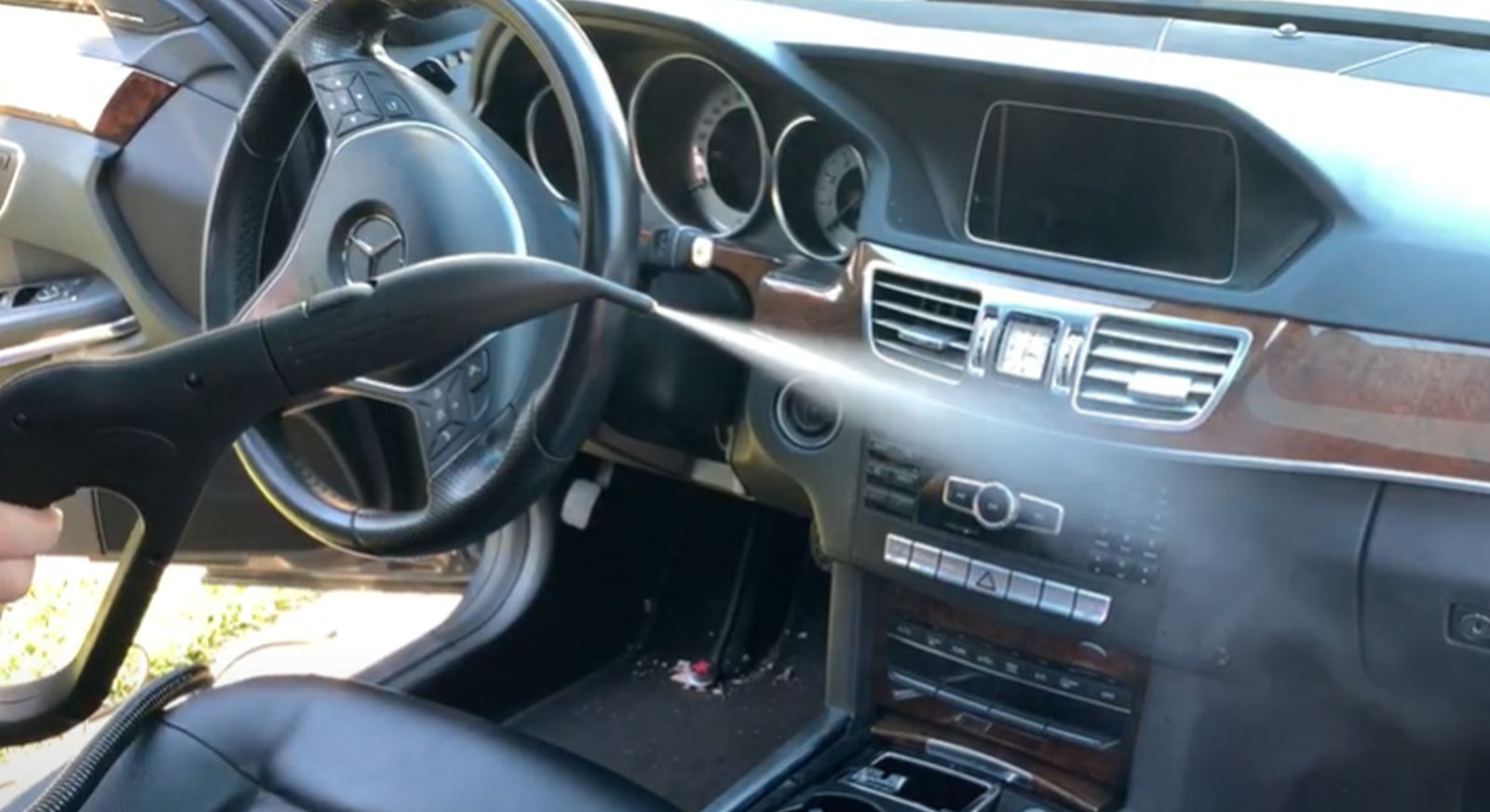
- Dash, console, door panels: Steam reaches textured plastic and crevices around buttons and vents.
- Headliner: Low moisture helps reduce adhesive issues. Use light passes, wipe immediately.
- Air vents and cup holders: A detail nozzle dissolves sticky residue without disassembly.
Exterior and engine
- Engine bay: Degreases without pressure washing splash. Cover sensitive electronics, work methodically.
- Wheels and wheel wells: Helps break down brake dust and road tar with less need for harsh wheel acids.
- Door jambs and seals: Lifts dirt from rubber seals without aggressive scrubbing.
- Trim and badges: Cleans around emblems where pressure washers can cause damage.
Limitation: steam does not extract liquid from deep padding. If you are dealing with water damage, pet urine, or deeply embedded carpet contamination, pair steam with a carpet extractor. See: Carpet Extractor vs Steam Cleaner for Auto Detailing.
Temperature and Pressure: What Specs Actually Matter
Not all steamers deliver the same results. For auto detailing, performance comes down to nozzle tip temperature and sustained working pressure.
| Spec | Minimum for auto detailing | Ideal range | Why it matters |
|---|---|---|---|
| Boiler temperature | 250°F | 290–320°F | Higher temps break down grease faster and support sanitization |
| Tip temperature | 210°F | 240–280°F | This is the heat that actually hits the surface |
| Pressure (PSI) | 45 PSI | 55–75 PSI | Higher pressure dislodges embedded particles from fibers |
| Steam dryness | 90%+ dry | 94–96% dry | Drier steam means faster drying and lower water damage risk |
| Boiler capacity | 1.5L | 2–5L | Larger boilers reduce refill interruptions during full details |
| Continuous fill | Optional | Recommended | Reduces downtime in high volume detailing operations |
Household steamers can work for light maintenance, but many struggle with embedded carpet stains and heavy grease. For professional results, pressure and sustained output matter more than marketing claims.
Steam Cleaner vs Carpet Extractor for Cars
This is one of the most common questions in detailing. The right choice depends on the job.
| Factor | Steam Cleaner | Carpet Extractor |
|---|---|---|
| Best for | Sanitization, leather, plastics, vents, engine bays | Deep carpet stains, heavy soil removal, pet contamination |
| Water usage | 1–2 gallons per car | 3–5 gallons per car |
| Drying time | 15–30 minutes | 4–24 hours (with airflow) |
| Chemicals | None by default | Often used for best results |
| Depth | Surface to mid level | Deep into carpet padding |
| Versatility | Nearly all vehicle surfaces | Mostly carpet and fabric |
Many experienced detailers use both: steam to break down grime and sanitize, then extraction to pull contaminants out. If you want the full breakdown, read: Carpet Extractor vs Steam Cleaner for Auto Detailing.
Step by Step: How to Steam Clean a Car Interior
What you will need
- Commercial grade steamer (55+ PSI, 290°F+ boiler)
- Microfiber towels (10–15 per vehicle)
- Detail brushes and nozzle attachments
- Leather conditioner (if applicable)
- Vacuum for pre cleaning
- Vacuum first. Remove loose debris so steam does not just move particles around.
- Headliner. Light passes, wipe immediately, work in small sections.
- Vents and crevices. Use a detail nozzle, then wipe loosened residue.
- Dash and door panels. Brush with microfiber bonnet, clean section by section.
- Seats. Fabric: medium pressure with overlapping rows. Leather: keep the nozzle moving, then condition after drying.
- Carpets and mats. Higher pressure, slower passes. If stains persist after two passes, use an extractor.
- Door jambs and trunk. Finish the edges, seals, and adjacent areas.
Total time: 60–90 minutes for a standard sedan. Heavily soiled vehicles can take up to 2 hours.
Best Steam Cleaners for Car Detailing in 2026
The best steamer depends on your volume, budget, and whether you are a hobbyist or a professional shop. Here is a practical comparison:
| Feature | Aqua Pro Steamer | Dupray Hill Injection | McCulloch MC1385 | Vapamore MR-100 |
|---|---|---|---|---|
| Target user | Professional detailer | Professional / commercial | Hobbyist / light pro | Hobbyist |
| Boiler temp | 310°F+ | 325°F | 275°F | 220°F |
| Pressure | 65 PSI | 72 PSI | 58 PSI | 50 PSI |
| Boiler capacity | 3.5L | 2.3L | 1.5L | 1.5L |
| Continuous fill | Yes | Yes | No | No |
| Auto detailing attachments | Included | Sold separately | Limited | Limited |
| Price range | $1,800–$2,500 | $2,200–$3,000 | $200–$280 | $300–$400 |
| Warranty | 2 years | 3 years (lifetime boiler) | 2 years | Lifetime |
If you detail cars full time, invest in a commercial unit with consistent output and continuous fill. If you are a hobbyist, a budget steamer can work, but expect limitations on embedded stains.
Explore: AquaProVac Steamers and AquaProVac Extractors.
Are Steam Cleaners Worth It for Auto Detailing?
Where steam excels
- Versatility: One machine can handle plastics, leather, vents, and more.
- Chemical savings: Many shops reduce chemical usage significantly once technique is dialed in.
- Eco friendly positioning: Low water and chemical free cleaning is a strong sales message.
- Sanitization story: Helpful for clients who care about hygiene and residue free cleaning.
Where steam falls short
- Deep extraction: Steam does not pull liquids out of carpet padding.
- Learning curve: Distance, speed, and pressure technique matter.
- Upfront cost: Pro units are an investment, but can pay back in productivity.
For professional detailers, a commercial steam cleaner is usually a high ROI purchase. For occasional personal use, a mid range steamer can be sufficient.
FAQ
Can you put vinegar in a steam cleaner?
No. Vinegar can corrode internal components, void warranties, and create unpleasant vapor in enclosed cabins. Steam alone is usually enough. If you need added cleaning power, use equipment designed for detergent injection.
What temperature steam cleaner do I need for car detailing?
For professional results, target at least 290°F at the boiler and 240°F at the nozzle tip, plus sustained pressure. Lower temperature household steamers work for light cleaning but struggle with embedded grime.
Can a steam cleaner damage car interior?
Yes, if used incorrectly. Risks include loosening headliner adhesive, discoloring certain plastics, and drying leather. Keep the nozzle moving, use correct distance, and condition leather after cleaning.
How long does it take to steam clean a car?
Typically 60–90 minutes for a sedan and up to 2 hours for SUVs or heavily soiled vehicles, including vacuuming and detail work.
Is a car steam cleaner better than shampooing?
They do different jobs. Steam sanitizes and dries fast. Shampooing with extraction removes deeper soil and is better for severe staining. Many pros use steam for routine work and extraction for deep cleaning.
How much water does a car steam cleaner use?
A typical steam detail uses 1–2 gallons of water, which is significantly less than traditional wash and detail methods.